

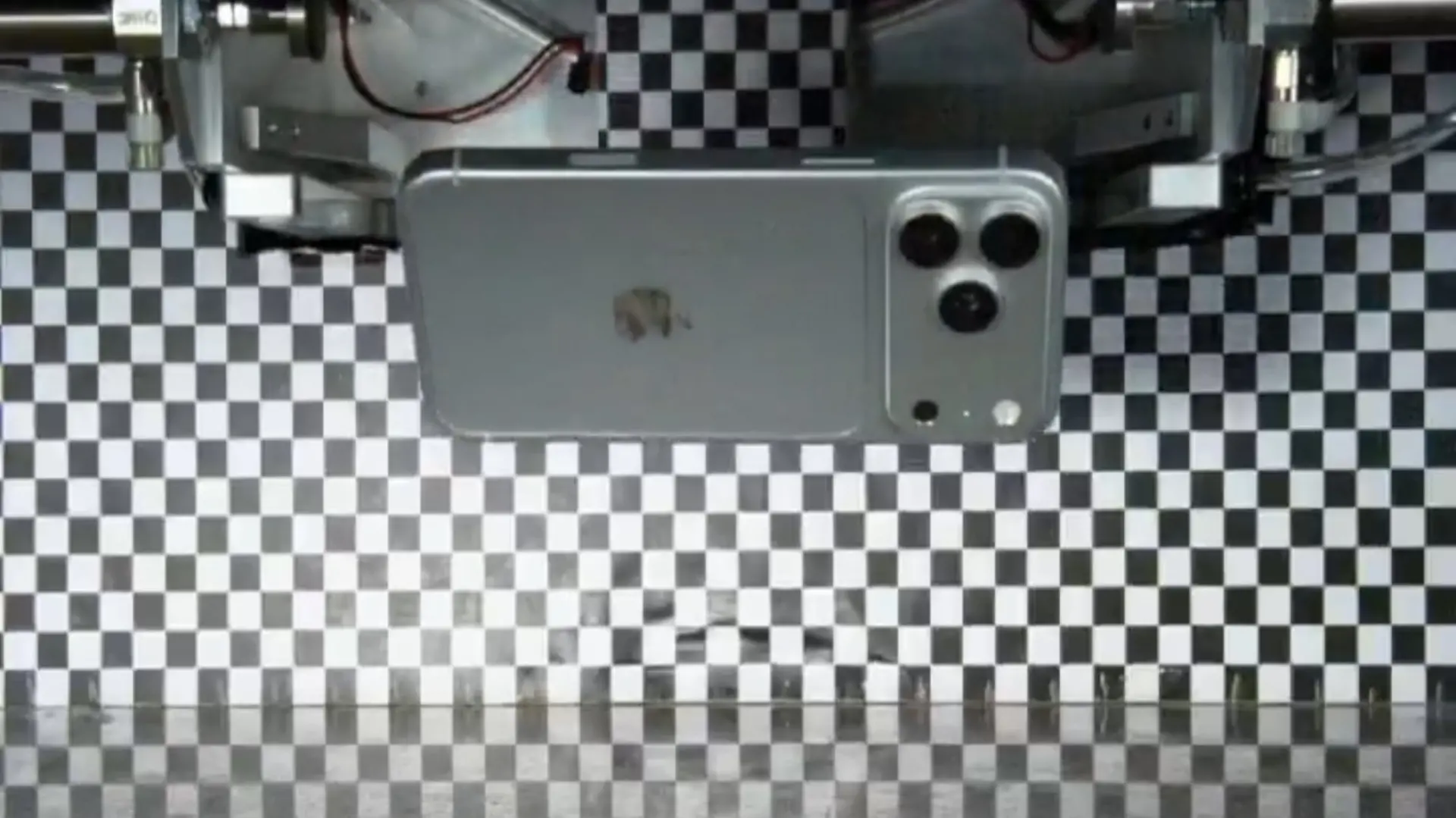
Apple has long been a fortress of secrecy, but a recent breach at one of its key manufacturing partners has blown the doors wide open. In what analysts are calling one of the largest leaks in Apple's history, photos and videos of the unreleased iPhone 18 Pro have surfaced online, showing the device undergoing internal drop testing. The leak originates from a data breach at Tata Electronics, an Apple supplier that produces components for the iPhone lineup. The incident exposed roughly 200,000 files, including supplier maps, component lists, and—most strikingly—real-world durability test footage of the next-generation flagship.
The Drop Test Footage
The leaked videos, shared by prominent leaker Evan Blass, depict a slab-style iPhone in a silver finish with flat aluminum- or titanium-looking sides. The rear panel closely resembles the iPhone 17 Pro, featuring a large rectangular camera island with rounded corners housing three camera lenses in Apple's signature triangular formation. An LED flash and LiDAR sensor sit alongside the lenses, while the centered Apple logo remains unchanged. In the footage, the iPhone 18 Pro is dropped onto a hard testing surface inside what appears to be a controlled laboratory environment. The device lands face down in one clip and survives the impact without visible damage, though the short duration of the videos limits a thorough assessment.
Context: Why This Leak Matters
Apple typically manages to keep its unreleased hardware under lock and key until official unveilings, with leaks often limited to CAD renders, dummy units, or speculative schematics. This leak, however, provides a rare glimpse of a fully functional prototype undergoing Apple's own internal quality assurance testing. The breach highlights vulnerabilities in Apple's extended supply chain, which spans hundreds of component manufacturers across multiple countries. Tata Electronics, a relatively new but growing partner in Apple's ecosystem, has been responsible for producing enclosures and other metal parts for iPhones. The breach reportedly occurred when unauthorized actors gained access to internal servers, exfiltrating files that included Apple's confidential watermarks and internal codenames consistent with the iPhone 18 Pro generation. Reuters, citing a source familiar with the matter, confirmed that the device shown in the images is indeed the iPhone 18 Pro, matching previously leaked dummy units.
The drop test footage itself is significant because it reveals Apple's durability testing protocols. Such tests are standard practice for all smartphone manufacturers, but public visibility of Apple's process is exceptionally rare. The controlled environment suggests the device was being evaluated for its structural integrity before mass production begins. The fact that the iPhone 18 Pro survived the drops without visible damage indicates that Apple's engineering teams are confident in the device's build quality. However, the leak also raises questions about why such sensitive internal testing material was not more securely protected. Industry experts note that Apple has tightened its security protocols in recent years, including using unique watermarked files to track leaks, but the Tata breach demonstrates that even these measures can be circumvented.
Beyond the Drop Test: Supplier Data Exposure
Perhaps even more concerning for Apple than the drop test footage is the scale of the supplier data that was leaked. According to Reuters, the stolen files include detailed supplier maps identifying which companies manufacture hundreds of individual components inside the iPhone 18 Pro. This includes chips, battery parts, camera modules, and other critical hardware. Apple considers such information highly sensitive because it reveals relationships between specific suppliers and unreleased products—data that could be exploited by competitors or used in future supply chain attacks. The leaked files also reportedly contain internal codenames for the next-generation iPhone, including references to the standard iPhone 18, iPhone 18 Pro, and possibly the iPhone 18 Pro Max. Notably absent from the breach is any information about Apple's long-rumored foldable iPhone—often referred to as the iPhone Ultra—which is expected to debut in 2026. Given that the leaked files number in the tens of thousands, it's possible that foldable-related documents are buried within the dataset and have yet to be discovered. Leakers and researchers are already combing through the files.
Historical Context of Apple Leaks
Apple has experienced numerous leaks over the years, but few have been as comprehensive or as early in the product development cycle as this one. In 2010, Apple engineer Gray Powell famously left a prototype iPhone 4 in a bar, leading to the device's public exposure weeks before its official launch. More recently, in 2021, a YouTuber leaked detailed images of the iPhone 13 lineup before its announcement. However, the Tata Electronics breach is on a different level: it involves not just physical hardware but digital documents that outline Apple's entire supply chain strategy for an upcoming product generation. The timing is also critical. Apple is currently navigating a period of transition, moving manufacturing away from China to diversify its supply chain. Tata Electronics, an Indian conglomerate, has emerged as a key partner in Apple's expansion into India. This breach could strain that relationship and prompt Apple to reassess its security requirements for suppliers operating in high-risk environments. Apple and Tata have launched a joint forensic investigation, restricting access to internal systems and reviewing access controls. However, once files are posted on the dark web, they are effectively impossible to contain. The information could surface on forums, social media, and even be sold to competitors or repair shops.
What This Means for the iPhone 18 Pro's Design
Based on the leaked footage and accompanying documents, the iPhone 18 Pro appears to retain the flat, industrial design language introduced with the iPhone 12 series. The silver finish seen in the video is likely one of several color options that will be available at launch. The camera island, while identical in shape to the iPhone 17 Pro, may house upgraded sensors. Some component lists leaked in the breach suggest the iPhone 18 Pro will feature a new periscope telephoto lens with enhanced optical zoom capabilities—a feature that has become standard on competing Android flagships. The presence of a LiDAR sensor suggests Apple continues to invest in augmented reality applications for the Pro models. The drop test footage does not reveal the front of the device, but based on other leaked schematics, the iPhone 18 Pro is expected to feature a slightly smaller notch—or perhaps even a Dynamic Island cutout—along with improved display brightness and efficiency. The leak also hints at a potential shift in materials: while the sides appear metallic, some internal documents mention a new “titanium-ceramic composite” for the frame, which could offer greater scratch resistance and durability than current models. As with any leak, caution is warranted. The footage could be from an early engineering verification test (EVT) unit, which may differ significantly from the final retail product. Apple often iterates through multiple prototypes before settling on a design. However, the fact that the device is undergoing drop testing suggests it is in the later stages of development, possibly nearing design freeze ahead of mass production in early 2026.
The iPhone 18 Pro is expected to launch in the fall of 2026, alongside the standard iPhone 18 and potentially the foldable iPhone Ultra. Based on the leaked component lists, the Pro model will be powered by the A19 Pro chip, manufactured on a 2-nanometer process by TSMC. This would represent a significant leap in performance and efficiency over the current A18 series. The leaked drop test footage, while brief, gives consumers a rare early look at what Apple has in store. For now, the focus remains on the security breach itself and what it means for the broader tech industry. As supply chains become increasingly complex and geographically dispersed, the risk of data breaches grows. Apple's response to this incident will set a precedent for how the company—and its competitors—handle similar threats in the future. One thing is certain: the iPhone 18 Pro's drop test is just the beginning of a long leak season leading up to its official unveiling.
Source:Android Authority News