

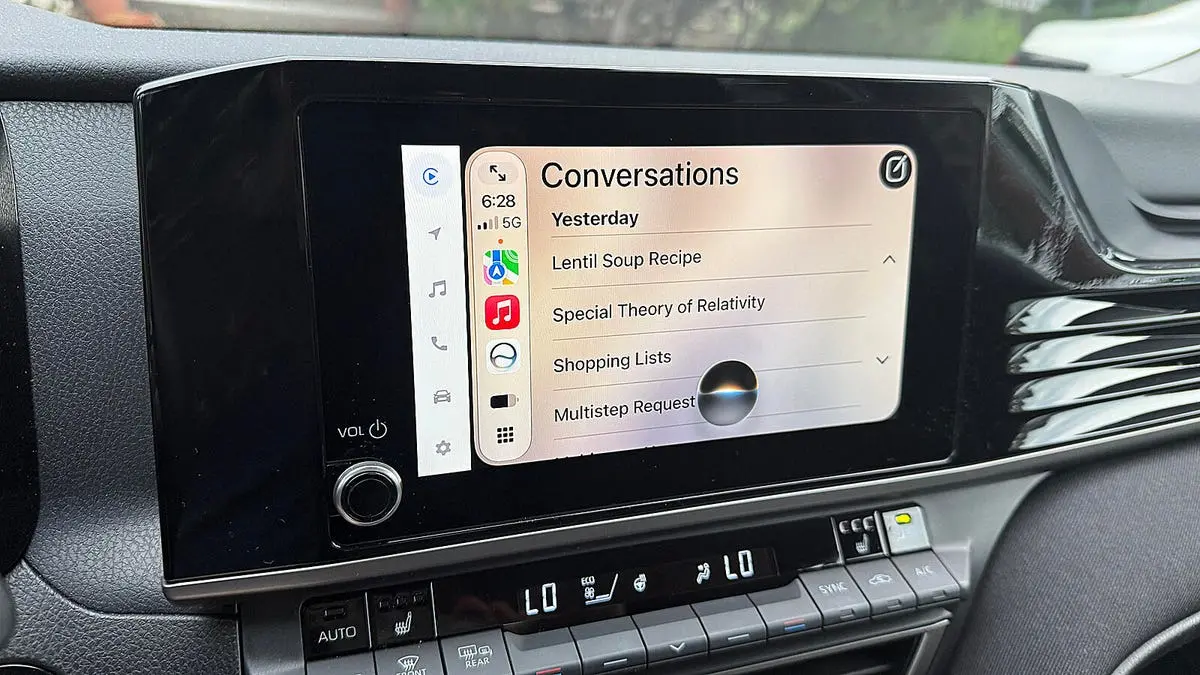
For many iPhone users, Siri has been a source of both convenience and frustration. In the car, where hands-free interaction is essential, a misunderstood command or a failed response can become a dangerous distraction. With the upcoming release of iOS 27, Apple promises a new Siri AI that is more intelligent, context-aware, and reliable. To see if the hype is justified, I conducted a real-world comparison using two identical iPhones—one running iOS 26 with the current Siri, and another running the iOS 27 public beta with the new Siri AI. Both were connected via Apple CarPlay in my vehicle, and I subjected them to a series of identical tasks. The difference was stark.
Requirements for Testing Siri AI
Before diving into the results, it is important to understand what is needed to access the new Siri. The iOS 27 public beta is available for supported devices. Siri AI requires Apple Intelligence, which is limited to the iPhone 15 Pro, iPhone 15 Pro Max, all iPhone 16 models, and all iPhone 17 models. I used a spare iPhone 15 Pro for the beta to avoid any risks to my primary device. Setting up CarPlay is straightforward through the iPhone's settings and the vehicle's infotainment system. Once connected, Siri AI is ready to use—no waitlist is required in the public beta.
Simple Tasks: Both Versions Perform Similarly
When given straightforward commands, both Siri editions handled them well. Asking for driving directions to a specific address, sending a text message, making a phone call, checking the calendar, and adding a reminder were completed without errors. This indicates that for day-to-day basic interactions, the current Siri is perfectly adequate. The real differences emerged when the complexity increased.
1. Driving Directions to a Contact
I asked Siri to navigate to a doctor listed in my contacts by saying, "Take me to Dr. [last name]." Regular Siri failed to even look at my contacts. Instead, it returned a list of doctors found from a web search, none of which matched the correct person. In contrast, Siri AI immediately scanned my contacts and provided turn-by-turn directions to the exact doctor. This test highlights Siri AI's improved ability to understand context and preference.
2. Adjusting Driving Directions Mid-Journey
After obtaining directions, I started a new conversation and asked Siri to avoid toll roads. Regular Siri simply explained how to set toll avoidance in the Maps settings, ignoring the current route. Siri AI seamlessly updated the existing directions to bypass tolls. This demonstrates Siri AI's capacity to connect related requests across separate utterances.
3. Finding and Evaluating Nearby Restaurants
Both assistants succeeded in finding local restaurants for a specific cuisine. However, the follow-up question—"What are the ratings and reviews for these?"—exposed a gap. Regular Siri either became confused or described a different set of restaurants. Siri AI consistently provided the requested ratings and reviews for the restaurants currently displayed on screen.
4. Learning About a Current Location
While driving through a small town, I asked both Siri versions to tell me something interesting about the area. Regular Siri replied that I should search the web when I stopped driving. Siri AI immediately delivered historical and cultural facts about the town, enriching the drive without requiring further interaction.
5. Playing Music from a Personal Library
Requesting "Play some Beatles music" triggered very different behaviors. Regular Siri defaulted to playing the Beatles channel on Sirius XM, even when I specified my own library. Siri AI automatically accessed my Apple Music library and played songs I had purchased. This is a significant improvement for those who prefer their own curated collections.
6. Multi-Part Requests
Siri AI is designed to handle complex, multi-step commands. I asked it to find a lentil soup recipe online, create a shopping list of ingredients, and text that list to me. It executed each step correctly, without any pauses or errors. Regular Siri cannot process such bundled requests at all, requiring the user to break them down manually.
7. Explaining Complex Topics
When asked to explain Einstein's theory of special relativity, regular Siri provided a short answer from a single source. Siri AI synthesized information from multiple web sources into a coherent, detailed explanation. It then offered follow-up suggestions, such as asking whether I wanted to delve into time dilation or mass-energy equivalence. This interactive, educational capability is a major step forward.
8. Playing a Game
Both were asked to play a game. Regular Siri directed me to open a game app. Siri AI offered simple games like coin flip, card draw, dice roll, or rock-paper-scissors. However, when I requested a trivia game about American history, Siri AI declined, explaining that it is designed to be more practical than playful. This limitation shows that Apple is prioritizing utility over entertainment for the car environment.
9. Teaching a Language
Finally, I asked Siri to teach me a language. Regular Siri again suggested searching the web after the drive. Siri AI asked which language I wanted to learn and, when I said Italian, promptly began a mini-lesson with basic phrases, translations, and pronunciations. It continued with new words and corrected my attempts, acting as a patient tutor.
The Overall Results
Across all tests, Siri AI won decisively in every scenario that required deeper understanding, contextual awareness, or multi-step execution. It did occasionally stumble—interrupting my speech or timing out on rare occasions—but these issues are expected in a beta version. The current Siri, while functional for simple tasks, falls short when the user needs a true intelligent assistant. With Apple's continued refinements before the official September release, Siri AI is poised to transform the in-car experience.
The tests also reveal that Siri AI is deliberately focused on productivity and safety, rather than casual entertainment. This aligns with the goal of minimizing driver distraction while maximizing useful output. As the public beta evolves, users can look forward to a voice assistant that finally understands not just words, but intent.
Source:ZDNET News