

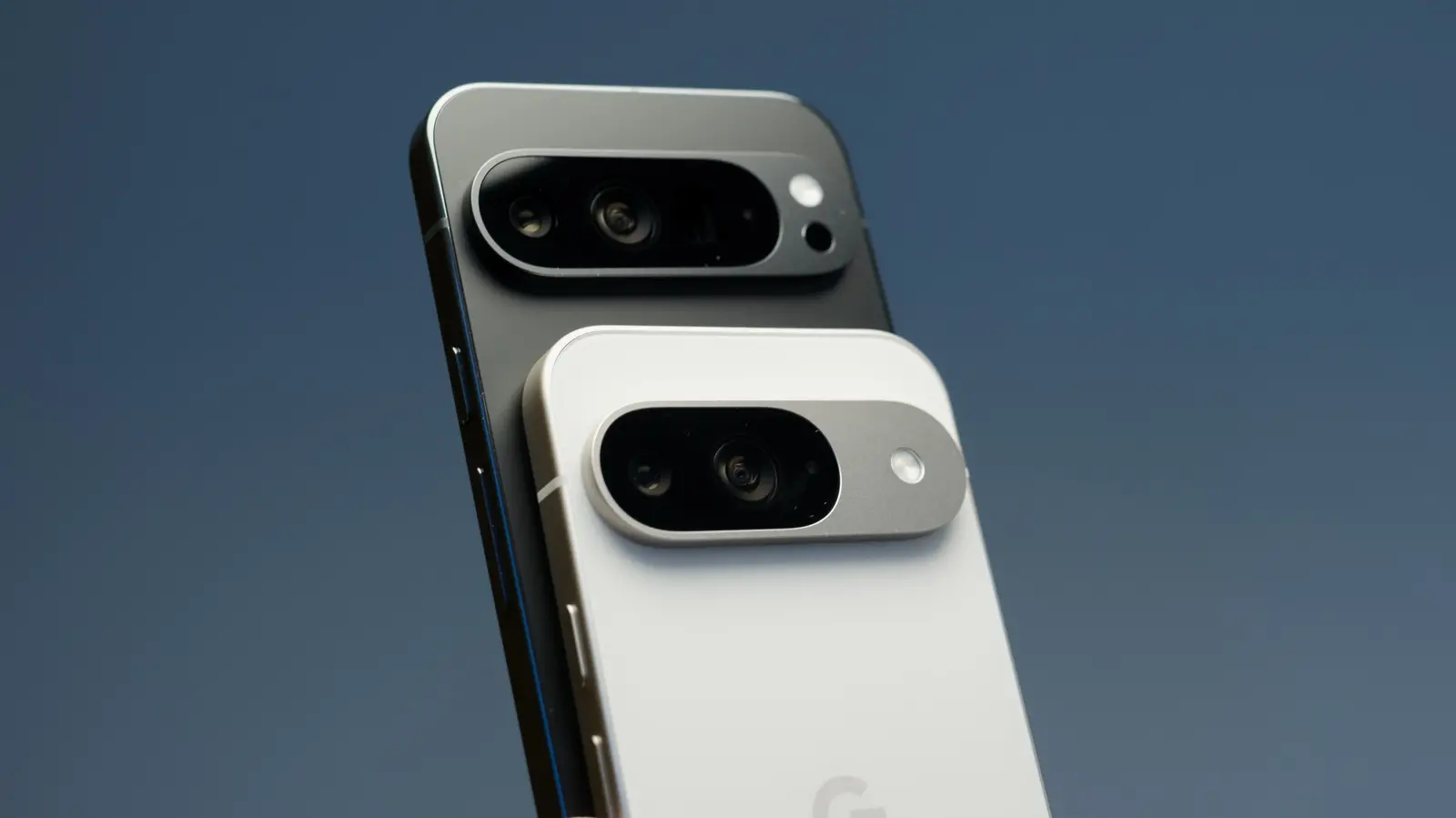
Google has been in the smartphone business since the early days of Android, but its early Nexus lineup relied on partners like HTC, Samsung, LG, and Huawei for hardware. The Pixel series, launched in 2016, marked Google's attempt to create a unified identity with consistent design language and software-first experience. Today, Pixel phones are known for offering up to seven years of Android updates, day-one access to new Android versions, and some of the best camera systems in the industry. However, despite these strengths, Pixels are not always the easiest recommendation. There are several drawbacks that potential buyers should consider before investing in Google's flagship line. This article delves into four major drawbacks, from processor performance to battery life, that may affect your decision.
Google's Tensor chip is falling behind
While a smartphone does not need to be the most powerful computer you own, paying close to $1,000 for a flagship device demands performance that can keep up with the competition. Google equips its current-generation Pixel devices, with the exception of the Pixel 10a, with the in-house Tensor G5 chip. On paper, this chip is significantly slower than Qualcomm's latest offerings. According to NanoReview, the Snapdragon 8 Elite Gen 5 outperforms the Tensor G5 by a factor of up to 2.7x in AnTuTu benchmarks. The budget Pixel 10a uses the older Tensor G4 from the Pixel 9 series, widening the gap even further.
Of course, real-world usage is more than synthetic benchmarks. In reviews of the Pixel 10 Pro XL, performance was generally smooth for everyday tasks. However, the weaker GPU becomes apparent in graphically intensive games. Titles like Genshin Impact or Call of Duty Mobile may run at lower frame rates or require reduced graphic settings compared to phones with Snapdragon chips. For mobile gamers or power users who multitask heavily, this performance gap can be a dealbreaker. Moreover, Tensor chips are fabricated on older nodes, leading to higher power consumption and heat generation under load. While Google's optimization with Android helps mask some of these deficiencies, the underlying hardware disparity remains a significant drawback.
Some Pixel features are region-locked
Google is a software-first company, and many buy Pixel phones not for the hardware but for the exclusive software features. Unfortunately, several headlining features are restricted to specific regions, limiting their usefulness for a global audience. Enhanced call screening, for example, is only available in countries like Germany, France, Australia, and India. Even within those countries, automatic call screening requires being located in the United States. Call Notes, which transcribes and summarizes conversations, does not work on Pixel A-series devices and is limited to a few countries and languages.
Other features such as Hold for Me and Take a Message are also region-locked. Scam Detection, a basic but important tool, is not as widely available as one might expect. This fragmentation is not unique to Google—Apple and Samsung also limit features geographically—but it is especially frustrating for a software-centric brand. Potential buyers should carefully check feature availability in their region and language before purchasing. Otherwise, they may end up with a phone that lacks the very capabilities that attracted them in the first place.
Pixel phones may not appear to be that exciting
Modern Pixel phones are well-built with glass sandwich construction and aluminum frames, bright displays with thin bezels, and excellent camera systems. Yet, when compared to the rest of the Android ecosystem, Pixel phones feel safe and unadventurous. Competitors like Oppo push boundaries with large sensors and periscope cameras, such as the Find X9 Ultra's 10x optical zoom. OnePlus offers powerful smartphones at lower prices. Chinese brands increasingly adopt silicon-carbon batteries for higher density and longevity. Gaming phones from Red Magic feature active cooling and shoulder triggers for a console-like experience.
Even the software experience on Pixel phones, praised for its cleanliness, can feel bland compared to feature-rich skins like One UI or OxygenOS. Google's minimalistic approach lacks the customization and extra tools that many users enjoy. In reviews of the Pixel 10a, critics noted how it offered almost no changes from its predecessor. While consistency has its merits, it also means that Pixel phones often lag behind in innovation. For tech enthusiasts looking for the latest advancements, this conservatism can be a major letdown.
Pixel phones sometimes struggle with battery life
Battery life depends on many factors: workload, screen brightness, and reliance on 5G versus Wi-Fi. To meet growing demands, manufacturers have increased battery capacities. Many Android phones now use silicon-carbon batteries reaching 7,000mAh or higher. Even mainstream brands like Samsung, which have used a 5,000mAh battery since the Galaxy S20 Ultra, achieve all-day life through efficient displays and chipsets. Chinese brands like OnePlus and Xiaomi also pack larger batteries and support fast charging up to 120W in some regions.
Google Pixel phones, by contrast, do not excel in battery performance. In a comprehensive test by YouTuber MrWhoseTheBoss, the Pixel 10 Pro XL lasted only 9 hours and 53 minutes, placing last among flagships. The Samsung Galaxy S25 Ultra managed 10 hours and 43 minutes. Additionally, Pixel phones charge slowly, typically maxing out at 30W wired and 23W wireless. Competitors offer much faster speeds, meaning less time plugged in. For heavy users or those who frequently travel, the combination of modest battery life and slow charging is a significant inconvenience.
Source:SlashGear News