

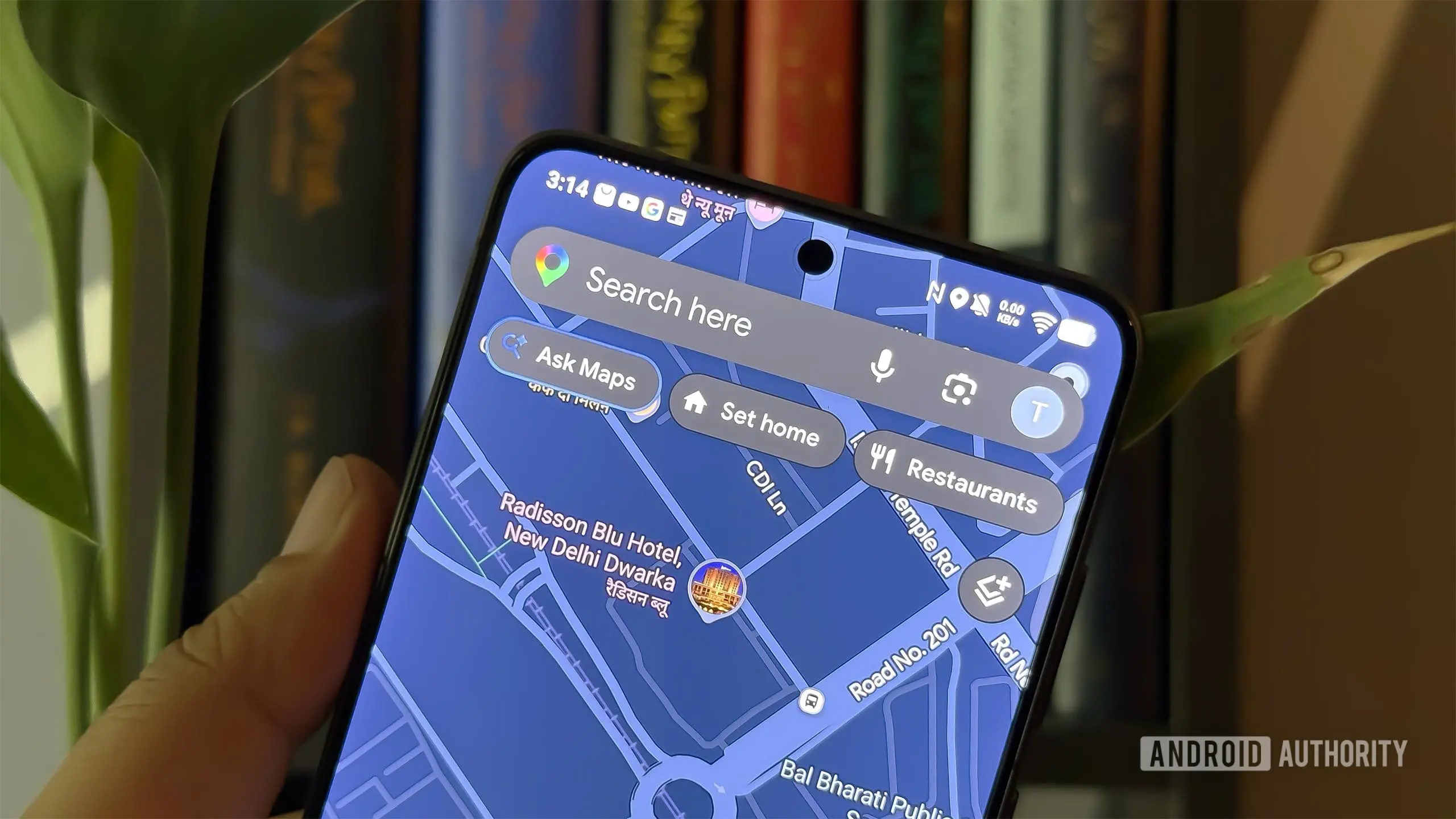
Google Maps is preparing to take a major leap forward in personalization by integrating Gemini's Personal Intelligence feature. Discovered in the latest beta version of the app, this update aims to break down the silos between Google services, allowing Maps to pull relevant information from your connected apps such as Gmail, Google Photos, Google Workspace, YouTube, and Search. The result will be a deeply contextual and personalized mapping experience that goes far beyond simple navigation.
The code strings found in version 26.30.00.950492155 of the Google Maps beta explicitly reference Personal Intelligence and explain how it will work. One string reads: "Supercharge Maps with Personal Intelligence" and another says: "Personal Intelligence now supercharges your Maps experience." These are clear indicators that Google is actively developing this integration. Additional strings provide more detail: "Get info about your reservations, flights, and more by connecting Maps and other Search services to your Google content apps, like Google Workspace and Google Photos. You're in control and can change this anytime."
What is Gemini Personal Intelligence?
Gemini is Google's advanced AI assistant, designed to compete with ChatGPT and other large language models. Personal Intelligence is a feature within Gemini that enables it to connect with a user's Google account and draw upon data from various Google apps and services. Instead of treating each app as an isolated data source, Personal Intelligence allows Gemini to synthesize information from multiple apps to deliver highly personalized responses. For example, a user could ask Gemini about their upcoming trip, and the AI could reference hotel booking emails in Gmail, saved places in Maps, flight details from Search, and even relevant photos from Google Photos to provide a comprehensive answer.
Currently, Personal Intelligence works across Contacts, Google Photos, Google Workspace (Gmail, Drive, Calendar), Search Services (including saved data from Search, Maps, and Shopping), and YouTube. The upcoming integration with Google Maps will expand this list, making Maps a more active participant in this interconnected ecosystem. The logical destination for this feature within Maps is the Ask Maps functionality, which is powered by Gemini and already allows users to ask questions about places, get recommendations, and learn about destinations. With Personal Intelligence, Ask Maps could become an indispensable travel companion.
How Will It Work in Maps?
Based on the uncovered code, when Personal Intelligence is active in Google Maps, the app will be able to surface reservations, flights, and other relevant information from your connected Google apps. Imagine opening Google Maps before a trip and seeing your flight departure time, hotel check-in details, restaurant reservations, and a list of saved places you've starred, all pulled together seamlessly. Ask Maps could then answer questions like "What's my hotel check-in time?" or "Show me restaurants near my saved places" without you needing to manually search through emails or other apps.
Beyond travel, the potential applications are vast. Personal Intelligence could help you find photos you took at a particular location, suggest routes based on your calendar events, or even recommend stops along your journey based on your YouTube watch history or search preferences. The feature is designed to be under your control, as the code emphasizes that you can change settings anytime. This aligns with Google's broader approach to privacy, allowing users to decide which apps and data sources Personal Intelligence can access.
We also spotted two new sections in the Google Maps account switcher: "Connected Content Apps" and "Personalization." While these are currently non-functional and only display an infinite loading animation, they represent the user interface for managing this integration. It's likely that Connected Content Apps will list all Google services that Maps can connect to, and Personalization will allow users to fine-tune how Maps uses that data. This could include toggling specific data sources or opting out entirely.
Implications for Privacy and Control
Integrating personal data from multiple sources naturally raises privacy concerns. Google has stated that Personal Intelligence is opt-in and that users maintain control over their data. The new settings in Maps are expected to provide granular control over which connected apps can contribute information. Users who prefer not to use this feature can simply leave it disabled. For those who opt in, Google will likely use its existing privacy infrastructure, such as data encryption and differential privacy techniques, to protect user information.
It's important to note that this feature is still in development. As the APK teardown suggests, some of these capabilities may not make it to a public release. However, the presence of detailed code strings and new UI elements indicates that Google is serious about bringing Personal Intelligence to Maps. The timing also makes sense, as Google is pushing Gemini across its suite of products, from search to productivity tools and now navigation.
Historical Context: Evolution of Google Maps
Google Maps has evolved from a simple map service into a full-fledged navigation, discovery, and local business platform. Over the years, it has added real-time traffic, public transit information, indoor maps, street view, and immersive view. The integration of AI and machine learning has been a key driver of this evolution. Features like live traffic predictions, suggested destinations, and personalized place recommendations already rely on AI. The addition of Gemini's Personal Intelligence represents the next logical step: making Maps not just a tool for getting from point A to point B, but a proactive assistant that anticipates your needs.
This move also positions Google Maps to compete with other AI-powered travel assistants and navigation apps. Apple Maps, for instance, has been adding more contextual features, while dedicated travel apps like TripIt and Google's own Google Trips (now discontinued) tried to consolidate travel information. By bringing Personal Intelligence into Maps, Google can leverage its vast ecosystem to offer a unified experience that few competitors can match.
For everyday users, the benefit is clear: less time manually searching for information across multiple apps and more seamless interaction with the map. If you have a flight confirmation in Gmail, a hotel booking in Google Travel, and a set of photos from a previous trip in Google Photos, Maps will be able to tie it all together. The same applies to business trips, daily commutes with multiple stops, or even planning a weekend getaway.
What's Next?
While there is no official release date, the presence of these features in a beta version suggests a public rollout could happen in the coming months. Google typically tests such features in beta before a wider release. Users who want to get an early look can join the Google Maps beta program on Android, though the non-functional settings indicate the feature is not yet ready for testing. Once live, it will likely be exclusive to users who have opted into Gemini and Personal Intelligence, which may require a Google One subscription or be part of a broader AI premium tier.
In summary, Google Maps is on the verge of a major update that will transform it from a map into a personal travel concierge. By integrating Gemini's Personal Intelligence with your connected Google apps, it will bring relevant travel information front and center, making trip planning and navigation more intuitive than ever. The code strings and new settings are strong evidence that this is more than just a rumor — it's a planned feature that could redefine how we interact with maps. Keep an eye on future updates for more concrete details as Google continues to lay the groundwork for this smartest update yet.
The ability to connect Maps with other Google services will undoubtedly make the app more powerful, but it also underscores the growing trend of AI-driven personalization. As Google continues to weave its AI assistant into every corner of its ecosystem, users can expect more features that blur the lines between apps. Whether this results in a truly seamless experience or raises new privacy concerns remains to be seen. For now, the future of Google Maps looks brighter and more intelligent than ever.
Source:Android Authority News