

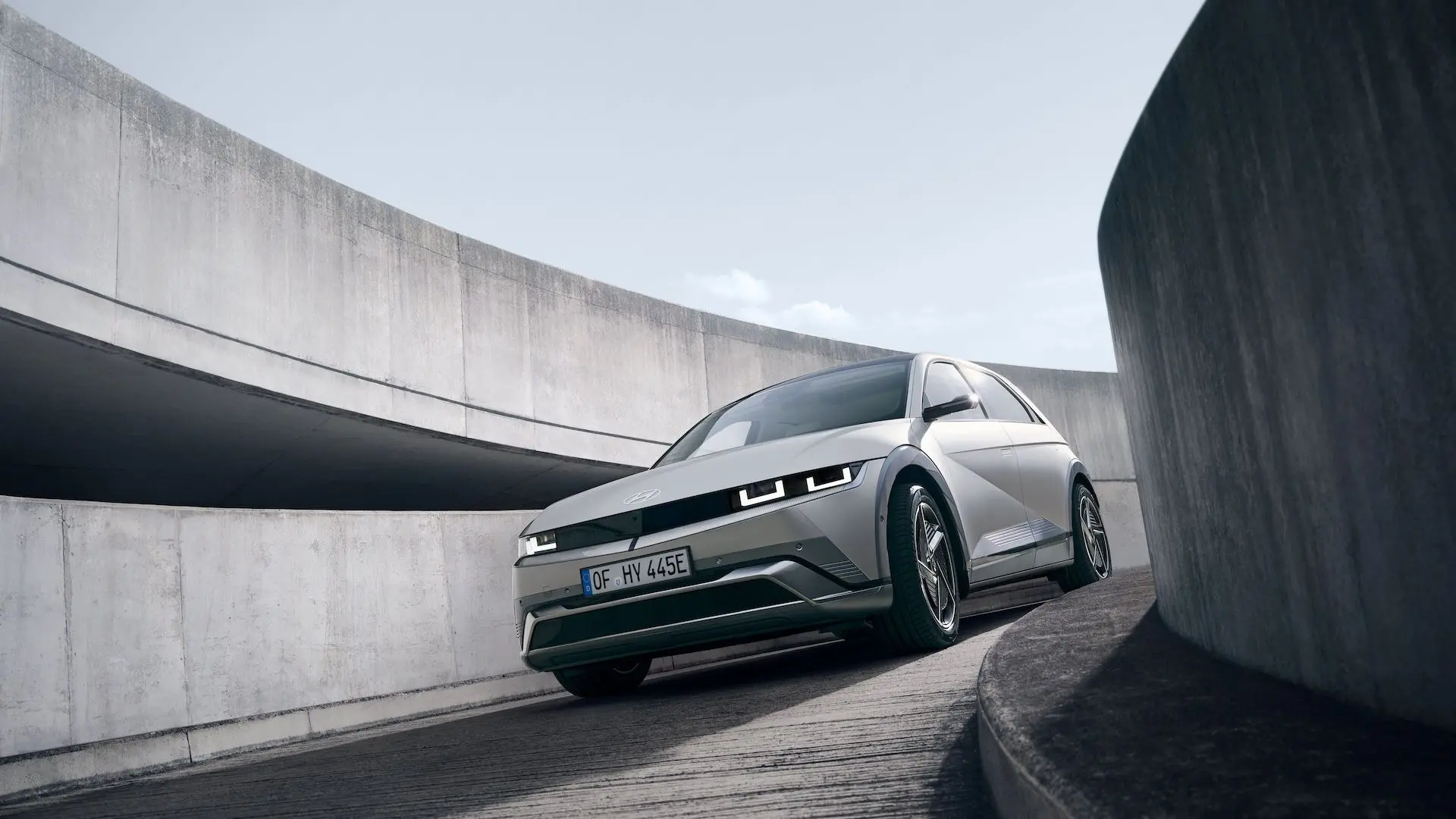
Hyundai has claimed a significant symbolic victory in the electric vehicle world. A large analysis based on 500,000 battery health tests found that Hyundai models were more likely to retain their original driving range over time than Tesla models. The result challenges the conventional assumption that Tesla, as the company that helped normalize mass-market EVs, must have the most mature battery formula.
Battery health is one of the most important numbers in EV ownership. Unlike a combustion car, an EV’s range can shrink as the battery ages. A new battery may promise 300 miles of driving; several years and many charge cycles later, it might promise 270. Automakers have worked for years to reduce that loss, but the rate of degradation varies by chemistry, thermal strategy, charging habits and the software that controls the battery.
This particular analysis matters because it used real data from a very large pool of vehicles rather than a handful of lab cells. Half a million tests can reveal patterns that would be invisible in a small sample. The result is a useful reminder that the brand selling the most EVs does not always own the most durable EV batteries.
What the half-million-test study says
The data behind the headline comes from vehicles in everyday use. That means owners charged at home and at public stations, drove in hot and cold climates, treated their cars harshly at times and gently at others. Some relied primarily on slow AC charging; others plugged into fast DC chargers whenever their schedule demanded. Most never thought about battery chemistry or charge curves. They just drove and charged.
In those conditions, Hyundai’s average battery health results surpassed Tesla’s. Put simply, the study found that Hyundai EVs were maintaining a greater share of their original capacity after real-world use. That is not a claim that every Hyundai lasted longer than every Tesla. Averages can hide outliers, but when measured across hundreds of thousands of tests, the trend is notable.
It also matters that the study did not simply count automotive warranty claims. It measured long-term battery capacity in what appears to be one of the most comprehensive databases of its kind. The study should therefore encourage EV buyers to look at the entire ownership experience, not just an automaker’s headline range figure or charging speed.
Why battery degradation still scares buyers
Consumer anxiety about battery degradation remains one of the largest barriers to EV adoption. Much of this fear exists because early electric cars had limited range and poorly controlled thermal systems. In extreme cases, owners experienced rapid capacity loss, especially when using DC fast charging on vehicles without active battery cooling. Those stories shaped public perceptions even after technology improved.
A modern EV is very different from a smartphone with a battery glued inside. Smart car batteries are designed to survive for many years. They have liquid cooling loops or advanced cell-to-pack insulation, heating elements to prevent cold-weather damage, and battery management systems that monitor both temperature and voltage. Still, not every system is equally good. The new Hyundai result shows that real-world engineering choices matter.
Drivers who plan to keep a car for eight or ten years care about range retention. So do lease customers, fleet operators and used-car buyers. A car that loses 10 percent of its range in three years is not the same proposition as one that loses 5 percent. When batteries cannot be cheaply replaced in many models, long-term health is a core part of total cost of ownership.
What Hyundai does differently
Hyundai has not always been perceived as a technology pioneer in the way Tesla has. Yet the company has made a number of decisions that appear to benefit long-term battery life.
One obvious area is thermal management. Hyundai uses a sophisticated heating and cooling system that limits battery temperature before and during rapid charging. This is not only useful for charging speed; it prevents the battery from spending too much time in conditions that accelerate chemical aging. Keeping the pack close to its ideal operating temperature reduces stress on the cells and improves capacity retention over the vehicle’s lifetime.
The company has also taken a thoughtful approach to charging behavior. Hyundai’s navigation system can plan routes to precondition the battery before arriving at a high-speed charger. Preconditioning does more than make the charging curve look good. It also ensures that the battery does not absorb high current while it is still cold and vulnerable. Repeated fast charging from a very cold or very hot state can degrade lithium-ion cells more quickly than normal driving.
Tesla’s battery strengths cannot be ignored
Tesla deserves credit in any honest conversation about EV battery longevity. The company has fielded some of the most energy-dense battery packs in the industry, built a massive Supercharger network, and helped establish an entire supply chain ecosystem. Tesla also collects enormous amounts of operational data. Its software has improved range estimation and charging recommendations over many years.
Tesla vehicles historically had good battery retention in conditions where owners mostly used slow overnight charging and did not regularly push the state of charge above 90 percent. Tesla’s own guidance asks drivers to limit the battery’s state of charge on long trips for good reason. The challenge is that many owners treat their cars more casually. Once charging becomes normal, drivers may leave the car at 100 percent, operate in extremely cold weather or rely on supercharging more often.
The Hyundais’ perceived advantage may therefore come from a combination of hardware and driver expectations. Hyundai’s battery policy may be more conservative, meaning the car might not always show the largest raw range figure but could protect reserve capacity in ways that benefit owners later.
The role of chemistry and charging cycles
Battery capacity loss is not one single event. It is a slow process caused by chemical reactions inside the cells. Each charge cycle promotes small amounts of material stress, especially when lithium ions move at high rates or when the cell operates beyond certain voltage limits. High temperatures accelerate these side reactions. Cold temperatures can also cause lithium plating in extreme cases.
Battery chemists have responded by developing more stable cathode materials, graphite blends with silicon, and electrolyte additives that build protective films on electrodes. Automakers, meanwhile, control the operating window of the pack. If a manufacturer sets a more conservative maximum voltage, the cell may not deliver all of its theoretical energy in a new car, but it can also age more slowly.
The study data does not necessarily indicate that Hyundai is using a magical cell that Tesla cannot buy. Both companies rely on lithium-ion chemistries and both source cells from major suppliers. The bigger difference may lie in how the complete system is tuned: how aggressively the battery is discharged to add rated range, how willing the thermal system is to cool the pack, and how the car predicts the driver’s charging needs before a fast-charging session.
How driving habits shape battery health
No automaker can prevent degradation entirely, because every cell ages even when idle. The question is how fast it ages. Owners who keep a high state of charge for long periods, repeatedly rely on ultra-fast chargers in cold weather, or park outdoors in extreme heat tend to accelerate cell aging. Owners who use scheduled charging, limit daily charging to a sensible amount and avoid leaving the pack empty also tend to see better capacity numbers.
Hyundai’s result in the study should not be read as a guarantee that every owner will get identical battery life. Individual driving behavior still matters. But the study suggests that Hyundai’s battery management system creates a forgiving envelope that helps average drivers preserve more capacity without making special sacrifices.
What this means for the used EV market
Battery health is becoming a key performance indicator for the secondary market. Third-party services already offer battery reports for used Tesla vehicles, and similar tools are spreading to other brands. A used EV with 95 percent of its original battery capacity is far more attractive than one with 85 percent, even if the mileage on the odometer is identical.
Hyundai’s strong performance in this study could increase residual values for its EVs. It also creates pressure on other manufacturers to demonstrate long-term capacity retention with comparable data. Automakers that can prove their batteries survive real-world abuse may be able to command higher prices and stronger consumer confidence.
A changing hierarchy
The global EV market is no longer a two-brand competition in which the biggest manufacturer or the most recognizable charging network has the final word. Legacy automakers are learning from their early electric mistakes, while new entrants are designing battery software as a major differentiator. The result is a more competitive and technically diverse field.
The Hyundai result invites drivers to ask a broader question: after 100,000 miles or ten years, which EV will still feel new? The answer will be determined by chemistry, software and thermal management long after the flashiest launch event has faded. According to the latest analysis of 500,000 battery tests, Hyundai currently has an edge. Whether it can keep that advantage in the coming years will depend on the choices it makes with next-generation cells, manufacturing scale and future battery-management updates.
Source:TechRadar News