

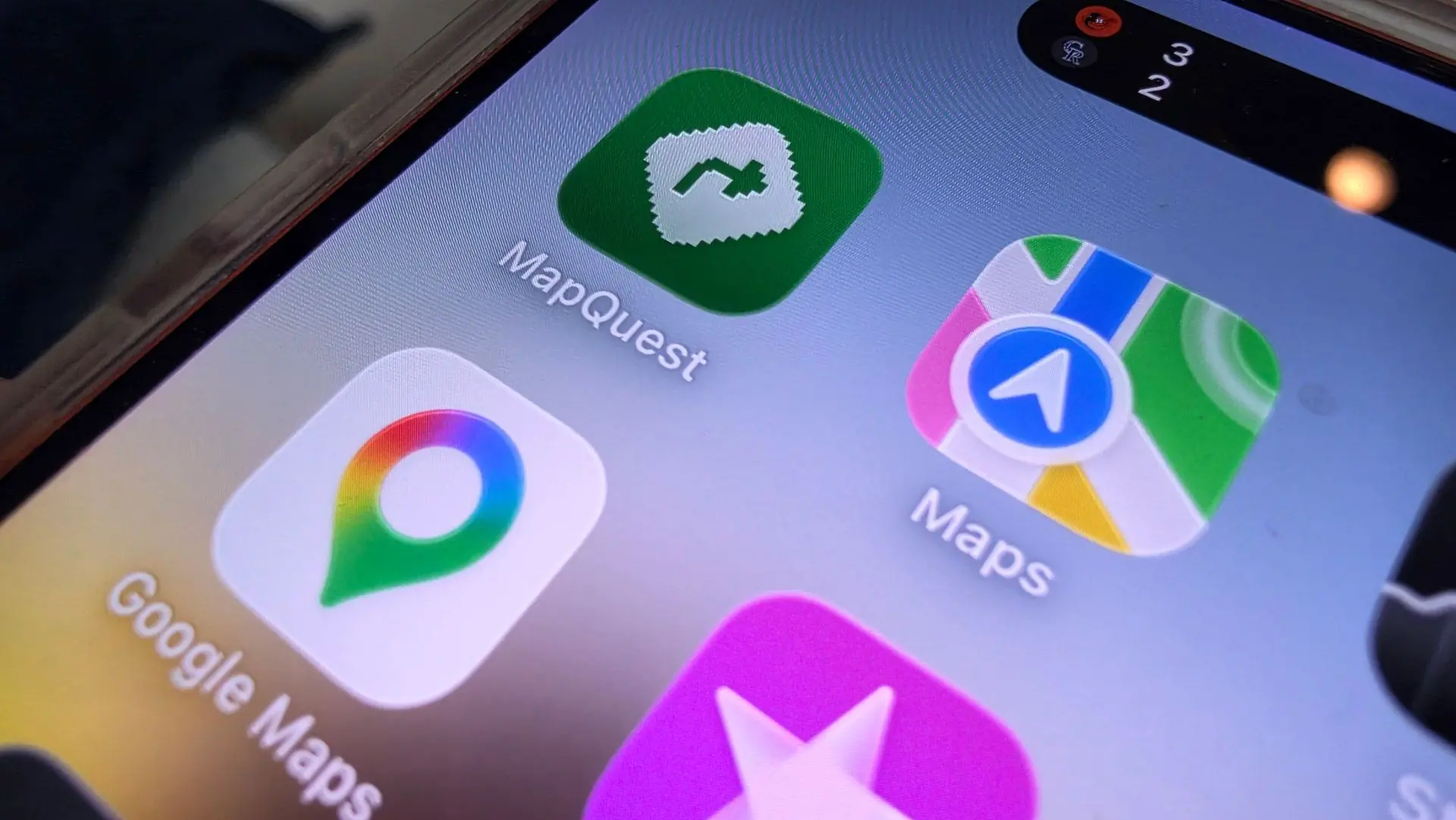
You have to hand it to MapQuest: the company that helped put online maps on the world's desktops in the late 1990s has held on to a certain curmudgeonly integrity. When a single person recently attempted to get Lake Ontario renamed through MapQuest's edit tools, the platform apparently said no. The request was bizarre, the kind of thing that only makes sense if you were trolling or if you had a deep, irrational attachment to a Great Lake you wanted to reclaim under a new identity. Yet the refusal didn't surprise anyone who remembers that MapQuest, for all its innovations, never quite became the social crowdsourcing platform that modern competitors like Google Maps and Apple Maps turned out to be.
There is a delicious irony in the episode. MapQuest was, for many years, the default way Americans found a trip route before smartphones became universal. In 1996, it launched as a free web-based mapping service, and it quickly grew into a household name. You printed out directions with step-by-step text and a small static map, folded the sheet into the glovebox, and headed out into the unknown. If a user had tried to tell MapQuest that Lake Ontario should be renamed under some personal vanity label back in 1997, they would have been laughed off the modem. The company was careful about geographic accuracy because its entire business model rested on being reliable enough to save drivers from getting lost on the way to a motel or a graduation party.
Fast-forward a quarter-century. MapQuest is still around, now under the umbrella of System1, a marketing and advertising company. It still offers turn-by-turn directions, and it still has a distinctive voice prompt that some drivers affectionately associate with the late-2000s era of physical Garmins and dashboard mounts. But MapQuest is no longer a serious rival to the two big mapping duopolies that dominate our screens. Google Maps and Apple Maps have moved far beyond simple directions. They operate as whole navigation ecosystems, with crowd-sourced traffic data, local business listings, user photos, public transit timetables, and even indoor building maps. MapQuest, meanwhile, feels less like a living atlas and more like a relic, a once-useful site you occasionally consult if you want to hear a robotic voice tell you where to turn.
What does Lake Ontario have to do with that gap? Everything, actually. The refusal to rename the lake reveals not just a policy against petty edits, but the deeper structural difference between closed geographic databases and live, community-driven map platforms. MapQuest treats geographic names as authoritative and immutable, built from official sources and licensed data. Google Maps and Apple Maps have also had their share of fakes and vandalism, but they have built sophisticated systems that allow users to suggest changes, often to the benefit of locals who know that a shopping center was renamed 10 years ago or that a dirt road closed to cars after a flood. The Lake Ontario fan would probably have gotten further with Google, where changes are reviewed by a community of trusted Local Guides, though even Google wouldn't simply rename a Great Lake.
But the author of this article, despite being amused by MapQuest's refusal, still has to admit a stubborn truth: I can't leave Google Maps and Apple Maps behind for one single reason. It's not the lack of a rename feature. It's not design, and it's not even the sheer volume of reviews for coffee shops and pizzerias. The one reason is the way these apps handle live, real-world changes through a continuous stream of location data from millions of phones. MapQuest, for all its serviceable directions, is still essentially a website that tells you how to get from A to B based on a static map. Google and Apple are dynamic orientation machines that constantly recalculate in the face of traffic, road closures, disasters, and even the subtle shifting of streets after construction projects.
Let's unpack that point. If you rely on MapQuest for your daily commute, you are using a database that you mostly receive, not a living database that learns. MapQuest does gather traffic information, but the frequency and accuracy of its updates do not compare to the real-time flow data in Google's mapping brain or Apple's improved routing engine. When an accident blocks the interstate, Google Maps knows within minutes, not because some administrator typed in an incident report, but because thousands of phones aboard cars have suddenly slowed down. Apple Maps sees the same phenomenon through its own metrics and provides a next-better route as if it were reading the mind of a local cabbie. MapQuest may detect a slowdown too, but its suggestions can feel slower to appear and less aware of the full texture of the area.
This isn't just about convenience. It's about trust. When you are driving in an unfamiliar city, late at night, low on gas, with a phone battery at 14 percent, you don't need an atlas that politely refuses to rename Lake Ontario. You need a guide that knows that a back exit is closed because of a police scene and that rerouting you through the parkway will save 12 minutes. You need a map that understands that the world is messy and ever-changing. The Lake Ontario fan may have wanted MapQuest to embrace a playful, hackable geography, but the opposite would probably be worse for everyone. If MapQuest allowed every random person to rename every major body of water, its maps would lose their authority and become a pile of inside jokes and civic pranks.
What MapQuest Was and What It Became
Born from the cartographic geniuses of Rand McNally, MapQuest introduced millions to the idea that maps should be free and interactive. It was a pioneer of route planning in a web browser, and for a long time it was one of the busiest websites on the internet. If you have ever printed a MapQuest directions sheet, you already know the distinctive pagination and the awkward moment where the map lines seemed to slide across the paper while the text said, &8220;Now turn left onto Main Street.&8221; The service never quite found a second act after the smartphone wars began, and by the time AOL spun it off and it was bought by System1, its identity had shifted to a cheaper, ad-supported utility.
The refusal to rename Lake Ontario, then, is fitting. MapQuest does not have a vibrant community of volunteer editors who debate the merits of a geographical title. It does not have a public portal where you can propose a change to the official toponymy and see your name in the credits. As a result, when someone asks MapQuest to rename a Great Lake, the answer is basically no. It wasn't that MapQuest was being stubborn for no reason. It simply lacks the infrastructure to validate and approve such whimsical edits. The request falls outside the narrow scope of what the company can handle.
Compare that to Google Maps. Google has a robust system called Local Guides where important contributors get points and perks, and absolutely anyone can report an error, add a missing place, or rename a business. There is also an entire community section dedicated to technical, historical, and cultural discussions. Apple Maps has a similar feedback loop, though historians are less prominent. But even in the case of a massive geographic feature like a lake, a change would require evidence: government records, topographical maps, official signage. That is not about refusing to appease one person; it's about protecting the map from chaos.
The One Reason That Keeps Me Anchored to Google and Apple
If you live in a city where traffic ebbs and flows like the tides, you know why the real-time difference matters. I have lost count of the number of times I've relied on Google Maps to steer me away from a surprise gridlock caused by a Selena Gomez concert or a sudden rockslide in a canyon. Apple Maps, since the 2018 redesign, has closed the gap in accuracy and has become my go-to for lane guidance inside complex, stacked interchanges that look like spaghetti bowls. This isn't to disparage MapQuest. MapQuest was there before all of us knew we needed a digital copilot, and it deserves credit for showing the world that online maps were possible. But that was the early days, when a map only had to be right about the name of a street, not know that a traffic light had just gone dark two blocks ahead.
Perhaps the most obvious distinction is how each platform treats time. MapQuest gives you directions from point&160;A to point&160;B. It doesn't care whether you leave at noon or at midnight. Google Maps and Apple Maps are aware of the departure time. If you set your departure to 8&160;am on a Monday, they can predict that you'll spend an extra 20 minutes crawling through the downtown core because they've seen thousands of such trips before. They use historical patterns to forecast traffic, not just to react to it. MapQuest can tell you how long the drive probably is, but its calculations often rely on generic speed limits and road categories, not on the deep pattern recognition that comes from billions of anonymous passenger journeys.
That's the one reason I can't leave Google Maps and Apple Maps behind. I need not just a map, but a live, learning navigator that adapts to the present moment. The Lake Ontario gag might have been good for a laugh on a slow news day, and MapQuest's refusal was perfectly reasonable, but it reinforced the sense that MapQuest is now a map of the past, where names were fixed and the roads were static lines. The future belongs to the maps that are restless, responsive, and full of the collective wisdom of everyone who has driven down the same road at the same time today. Google and Apple may not let you rename a Great Lake either, but they make your drive easier in far more meaningful ways—and that's why, after all these years, they're still at the center of my dashboard.
Source:TechRadar News