
The generative AI boom started in early 2023 with two eye-catching skills: writing long-form content and producing vivid, photorealistic images. Since then, progress has been dramatic. AI models now handle complex revision tasks, clean up flawed photos, and even generate original poster art from a single sentence. But not all image generators are equal. A new set of rigorous tests, based on dozens of prompts and hundreds of individual evaluations, found a clear champion.
Google’s Nano Banana Pro, included with Gemini 3, racked up a near-perfect score by earning 93% across the entire test suite. ChatGPT came in second with 74%. The other four tested tools finished between 43% and 54%, showing that the gap between the leader and the pack is far larger than expected. For anyone weighing a paid subscription, the message is striking: one product simply dominates.
What the testing process involved
The evaluation involved six widely used AI image generators. The tester generated more than 50 images and put each generator through nine separate prompts. Each generated image was then scored across 30 individual checks, generating an aggregate score that could be compared across all platforms. The test prompts fell into four categories: revising an existing image, creating an entirely new one, adding text within an image, and exploring references to pop culture.
All images were produced in a square 1:1 aspect ratio so they could be reviewed side by side. While that is not necessarily the best format for every scenario, it made direct comparisons fair and straightforward. The tester was particularly interested in how well each model handled realistic human faces, tricky text, and clean composition under tightly constrained requirements.
Nano Banana Pro: the clear winner
The winner, Nano Banana Pro from Google, is available through the Google AI Pro plan at $19.99 per month. It was the first tool in years of reviewing to earn a no-contest, total knockout victory. Its impressive score came from handling nearly every prompt flawlessly. The only deductions were for a watermark placed on each output image and a few minor text errors in specific restoration tests.
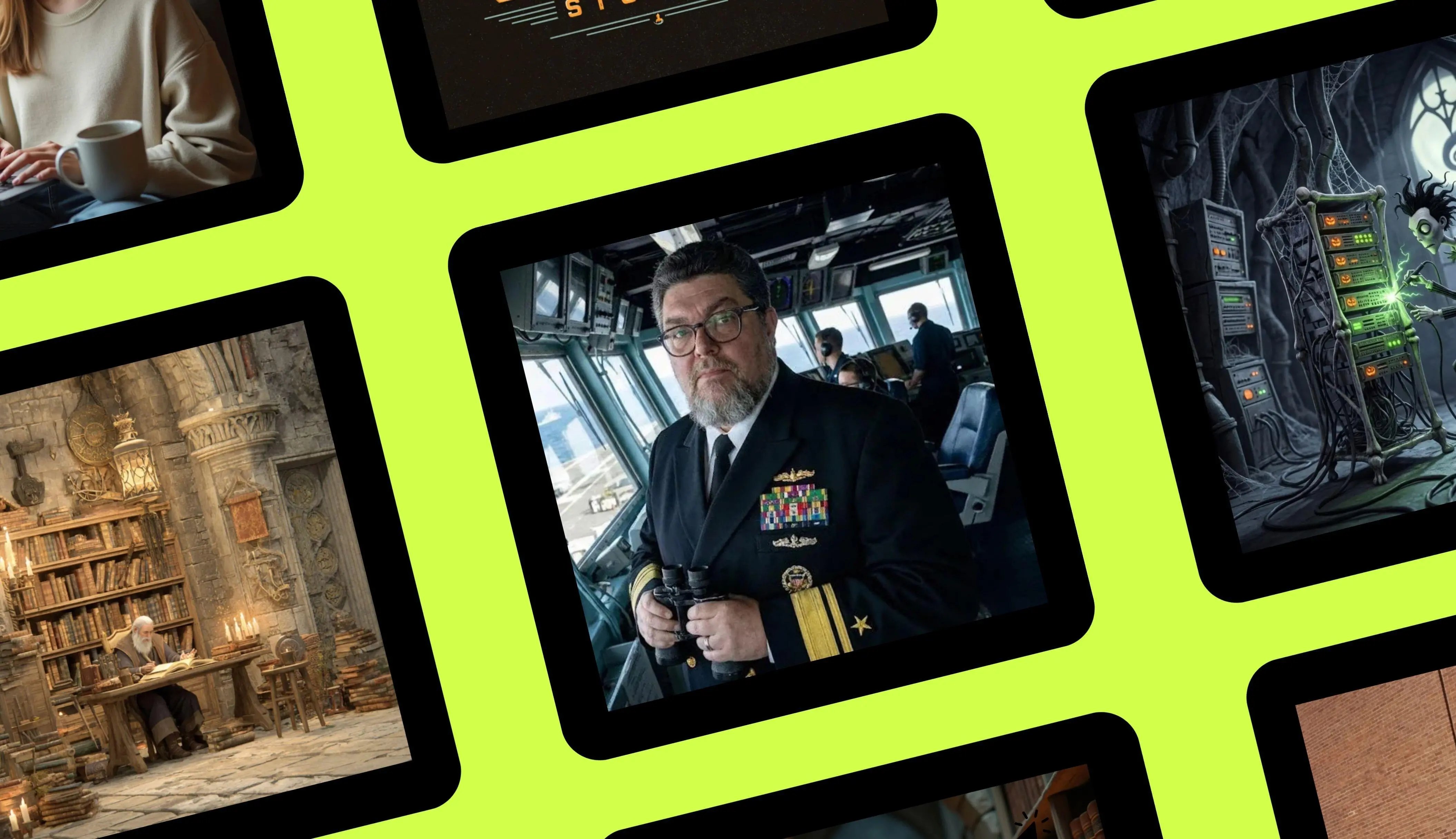
The first major test involved recontextualizing a photo: taking an ordinary outdoor picture of the tester and placing the subject into a completely different scene. Nano Banana Pro transformed the image into a person wearing a US Navy admiral’s uniform, standing on the bridge of an aircraft carrier. The face stayed faithful to the original, the glasses remained intact, and the model even adjusted the angle of the head to fit the new environment. The uniform did have certain details that may not pass a military inspection, but the overall realism was extraordinary.
Nano Banana Pro also made short work of restoring an old black-and-white photo. Scratches, dust, and heavy shadows disappeared. Faces remained recognizable, and the preservation of the original subject’s features impressed the reviewer. The model did have one moment of confusion when asked to clean up and colorize a vintage truck photo: in an earlier session it showed the wrong photo entirely. Once a fresh session was started, it processed the truck correctly, producing readable lettering and a convincing color scheme.
Style prompting shows another strength of Nano Banana Pro. Asked to create a retro-futuristic logo for “Space Coast Studios,” it wove together a rocket, film imagery, a palm tree, and clear, accurate text. The same run produced a detailed medieval librarian in a candlelit stone library, with warm lighting and stone texture that matched the prompt. The model also handled social-media-ready images with impressive text overlay work. A senior adult holding a flagship smartphone, plus another image of a student with a MacBook Pro and a cup of coffee, both kept text accurate and readable. Interestingly, the smartphone was rendered as an iPhone, despite the model being from Google.
Pop culture proved the most pleasant surprise. A fictional fourth “Back to the Future” movie poster featured a DeLorean, a skateboard, a marquee reading “New York City 1925,” a tagline about the Roaring Twenties, and period-appropriate clothing. A “Nightmare Before Christmas” style prompt for an IT professional in a data center produced a stylized scene that felt close to Tim Burton’s visual language. Across all the tests, Nano Banana Pro simply did not get much wrong.
ChatGPT takes a distant second
ChatGPT’s built-in image generator now runs on a newer model that is a major improvement over previous image generation technology. The tester gave the new version a thorough redo after earlier testing, and it earned 74%, a full 19 points behind Nano Banana Pro. Part of the gap comes from a strange inconsistency in handling pop-culture references.
On photo retouching, ChatGPT performed fairly well. The admiral recontextualization kept the original face, although the uniform’s rank insignia looked muddled. The child’s photograph restoration preserved the face much better in the new version than in the old one, and the vintage truck cleaned up well, with lettering that read “Radio Chemical Defense” instead of the original wording. Small errors like that cost the model points.
For original creativity, ChatGPT handled the logo and the medieval librarian with no point deductions. Its social media images included correctly spelled text overlays, though both blocks were awkwardly placed in the same part of the image. Low contrast made the text somewhat difficult to read, and the model took a deduction for each of those two tasks.
The biggest loss came from the pop-culture prompts. When asked to generate images inspired by “Back to the Future” and “Nightmare Before Christmas,” ChatGPT refused and returned a negative response. That dropped the model’s score considerably. The earlier version had produced a serviceable “Back to the Future” poster, but even then, a Nightmare-Inspired IT worker gained an extra third hand. Pop-culture references are clearly unpredictable with ChatGPT image generation.
Midjourney: powerful but limited in key areas
Midjourney remains a favorite among creatives for hyper-stylized cinematic imagery, and the tests confirmed that strength. It earned 57%, placing third behind ChatGPT. The model produces beautiful, evocative artwork when asked to make something new, but it falls apart on editing or text-heavy assignments.
The recontextualization test exposed a major weakness: the generated admiral was not the same person as the original photo. The kid’s photograph restoration made the image worse, and the truck restoration produced a completely different truck, with an unrelated woman who looked like a captain from a sci-fi show placed in the scene. These three image-revision prompts all scored poorly.
The logo came out with correct text, and the medieval librarian image matched the vision almost perfectly. Midjourney also created a highly realistic senior adult and a composed student scene, but it completely omitted the required text overlay for both social media posts. Points were removed for missing text on those assignments.
In pop culture, Midjourney’s “Back to the Future” poster lost some points because it included no text and used a neon-drenched city that did not evoke 1920s New York. The Nightmare-Inspired IT worker, however, was a great success, proving why Midjourney retains such a strong fanbase.
Adobe Firefly: capable but overly cautious
Adobe Firefly, now bundled into Firefly Standard at $9.99 per month, scored 54%. Its biggest problem was an overprotective copyright filter. The model outright refused to let the tester upload a photo with a graphic t-shirt, requiring the graphic to be removed with another AI tool before processing could continue.
Firefly also showed weaknesses in subject fidelity. The admiral uniform looked unconvincing, the face was not the original subject, and the truck colorization failed to clean up artifacts from the source photo. The logo was solid, but the fantasy librarian face fell into an uncanny valley that made the character unsettling.
Firefly proved particularly uncooperative on social media prompts. The mystery lay in its guidelines: the phrase “Facebook-style” was flagged as an artist style reference, causing the system to reject the prompt. After rewording, the image generation worked, but the text still contained spelling errors. Physical details were also wrong, with unnatural arms and hands.
The tool refused to produce the pop-culture Inspired pieces entirely. Although that is understandable for copyright reasons, it hurt the score in a set of tests where most other models engaged with the spirit of the request.
Leonardo AI: strong art, weak reasoning
Leonardo AI scored 52%. It completely failed to handle any of the image-revision tests. It would not meaningfully transform the provided images, so those points were largely lost. However, it did create a workable logo and a fantasy librarian that matched the prompt.
The social media images from Leonardo AI were partial successes. The senior adult was realistic overall, but the student sitting with a laptop looked physically awkward. One leg wrapped strangely around the laptop, and a coffee cup seemed ready to fall. The text was missing entirely from both posts, eliminating key points.
One notable strength was pop culture. Leonardo AI generated a poster that actually followed poster formatting rules, but the fake movie title displayed nonsensical text: “HAMY JOB OARY OF DOSE.” The cars and buildings looked nothing like the 1920s. The Nightmare-Inspired data center employee was strangely compelling, using a photorealistic character with a Lurch-like appearance. It became one of the tester’s favorite images of the entire study.
Canva: easy marketing, weak AI
Canva’s internal AI image generator scored only 43%, which placed it at the bottom. Although Canva is an excellent design tool, its native image model struggled with most of the challenges. The tester subscribed to Canva’s Business plan at $20 per month, which also includes Leonardo AI tools.
The photo restoration results were almost surreal. One recontextualization put trees on the deck of an aircraft carrier. A truck restoration turned the vehicle into something unidentifiable, and a peculiar floating head appeared above a bizarre hybrid structure. These outputs were more funny than functional, and the scores reflected that.
Canva handled the logo and librarian assignments without issue. The social media posts, however, missed the mark. The text in one image was too widely spaced, and the other image had text that lost all coherent meaning. Another coffee cup was balanced dangerously on a leg, a recurring composition flaw across multiple tools.
The model produced a “Back to the Future” poster with a functional logo and a DeLorean, but the rest of the image was confusing nonsense. It refused to generate the Nightmare-Inspired image despite having already allowed a similar pop-culture prompt, showing a frustrating and unpredictable copyright policy.
The most practical finding of this comparison is simple: for polished, reliable AI image generation, Nano Banana Pro is the only tool that feels like a must-have. With a score of 93%, it sweeps past ChatGPT, Midjourney, Firefly, Leonardo, and Canva in nearly every category. The second-place ChatGPT still offers excellent value and user-friendly chat integration, but its inconsistent behavior with pop-culture prompts and weak text rendering makes it less dependable.
Midjourney remains a great choice for original artwork and cinematic looks. Firefly makes sense for commercial-safe projects where clear licensing is a priority. Leonardo AI produces fun, creative pieces even if its text output is unreliable. Canva is best reserved for users who need AI within a broader marketing workflow and are comfortable with its uneven quality.
Each tool brings different tradeoffs to the table. Some favor speed and ease, others emphasize style and mood, and a few are cautious to the point of frustration. But after nine demanding prompts and more than 50 generated images, one headline stands out: there is a new champion in AI image generation, and by a remarkably wide margin.
Source:ZDNET News