

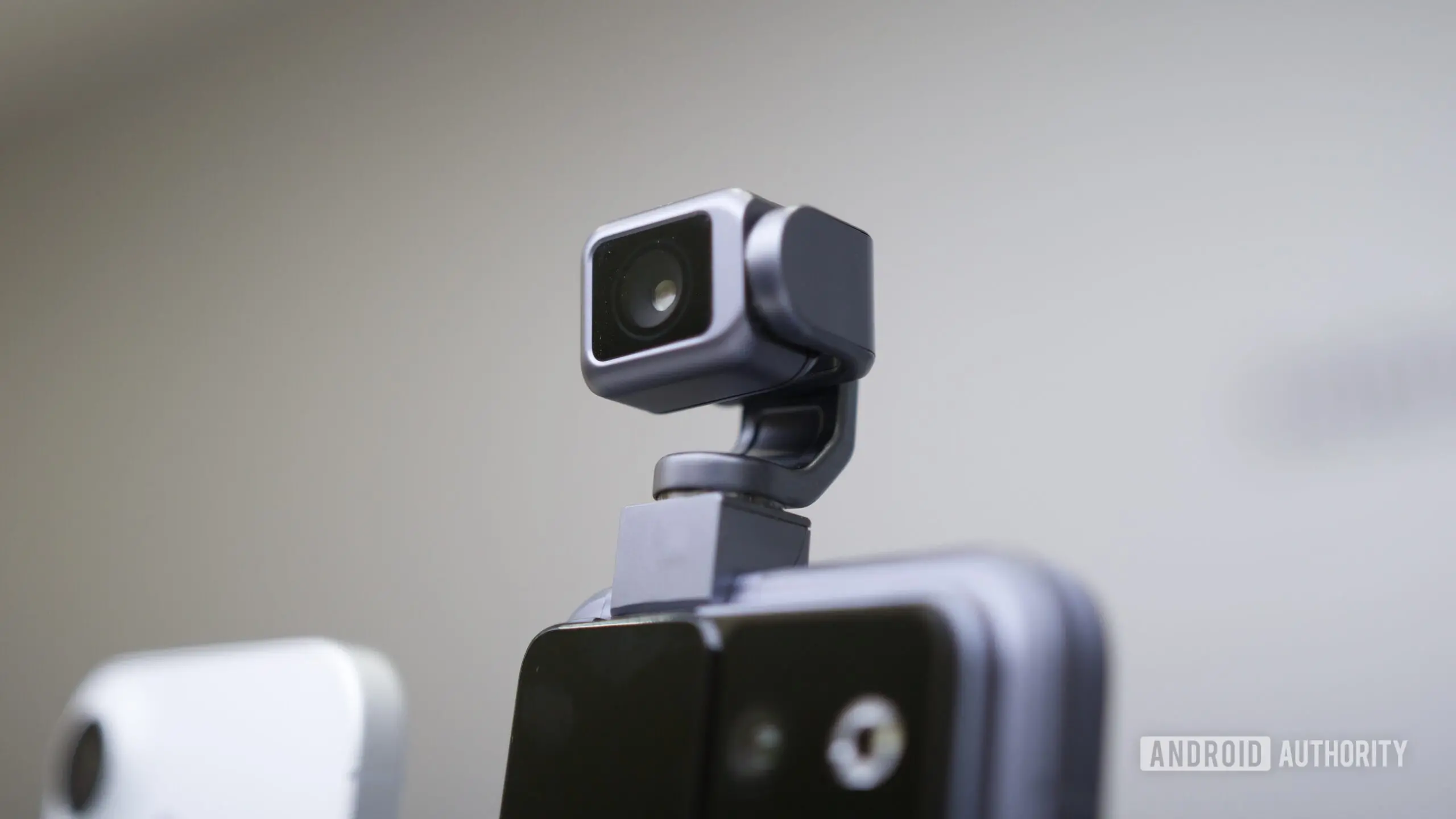
Honor is preparing to launch one of the most innovative smartphones in recent memory: the Honor Robot Phone. First teased at MWC 2026 in Barcelona, the device captured attention with its unique robotic arm camera system. Now, a detailed leak from reliable insider Digital Chat Station has revealed the phone's key specifications, suggesting it could be a true camera flagship.
Display and Design: Flat and Compact
The Honor Robot Phone is expected to feature a completely flat 1.5K resolution display, measuring between 6.3 and 6.4 inches. This is a departure from the curved screens that dominate today's flagship market, appealing to users who prefer flat panels for better durability and easier screen protector application. The flat design also aligns with the phone's utilitarian, robot-inspired aesthetic. The lack of curvature may also improve touch responsiveness and reduce accidental touches during one-handed use.
Performance: Cutting-Edge Silicon
Under the hood, the phone will likely be powered by the Snapdragon 8 Elite Gen 5 chipset. This Qualcomm flagship processor is expected to deliver significant gains in AI processing, graphics performance, and power efficiency. Paired with likely 12GB or 16GB of RAM, the Honor Robot Phone should handle heavy multitasking, gaming, and camera AI workloads with ease. The chipset's advanced AI engine will be crucial for the gimbal camera's stabilization and subject tracking algorithms.
Camera System: The Gimbal Revolution
The standout feature of the Honor Robot Phone is its 200MP 4D gimbal primary camera, mounted on a robotic arm. This is not merely a software-based stabilization system; it is a physical gimbal that can move the entire camera module to counteract motion. The 4D stabilization compensates for pitch, yaw, roll, and even lateral movement, promising buttery-smooth video even while walking or running. The 200MP sensor is likely to use pixel-binning technology to produce 12.5MP or 50MP images with excellent dynamic range and low noise.
Complementing the main camera are a 50MP ultrawide shooter and a 200MP periscope telephoto lens. The periscope telephoto is expected to offer significant optical zoom, likely 5x or more, with high-resolution cropping enabling lossless digital zoom up to 10x or higher. The ultrawide lens, with its 50MP resolution, will capture expansive landscapes and architectural shots without sacrificing detail. All three cameras are reportedly manufactured by Arri Imaging, a respected name in professional cinema cameras, lending credibility to the promise of video prowess.
The gimbal camera system opens up creative possibilities: it can automatically track subjects, perform smooth pans, and even create time-lapse sequences with professional fluidity. The robotic arm likely allows the camera to tilt and rotate freely, enabling unique shooting angles without moving the phone itself. This is not just a gimmick; it fundamentally changes how mobile videography can be approached.
Battery and Charging
The leak indicates a battery capacity of approximately 6,000mAh, with the leaker suggesting it could be even larger. This is a substantial battery for a phone with such advanced camera hardware and a moving gimbal, which requires extra power. With the Snapdragon 8 Elite Gen 5's efficiency and likely support for 100W or higher wired charging, the Honor Robot Phone could offer all-day battery life even with heavy camera use. Wireless charging is also expected, possibly at speeds of 50W or more.
Market Positioning and Launch
The Honor Robot Phone is expected to launch in China in August 2026. Given its advanced technology, it will likely command a premium price, possibly exceeding the cost of existing flagship phones like the Honor Magic 9 series. The phone is unlikely to be sold in the US market due to trade restrictions and Honor's limited presence there, but a global launch in other regions could follow the Chinese debut. The device represents Honor's ambition to differentiate in a crowded smartphone market by pushing the boundaries of camera hardware.
Background: The Rise of Gimbal Cameras in Smartphones
While Honor's Robot Phone is the first to feature a fully motorized gimbal, the concept of gimbal technology in phones is not entirely new. Several brands have explored optical image stabilization (OIS) on multiple axes, but a true physical gimbal has been reserved for accessories like the DJI Osmo Mobile or Zhiyun Smooth. Integrating the gimbal into the phone itself eliminates the need for an external stabilizer, making professional-level stabilization accessible at all times. This is a natural evolution of the smartphone camera arms race, where stabilization has become as important as resolution and aperture.
Honor has a history of camera innovation. The Honor Magic series has consistently ranked among the best camera phones, often scoring high on DxOMark. The company also pioneered the use of multiple cameras and AI enhancement. The Robot Phone can be seen as the culmination of these efforts, combining high-resolution sensors with mechanical stabilization.
Comparisons to Other Flagships
When it launches, the Honor Robot Phone will compete with other 2026 flagships like the Samsung Galaxy S26 Ultra, the iPhone 18 Pro Max, and the Xiaomi 16 Ultra. However, its gimbal camera gives it a unique selling point. For example, the Samsung Galaxy S26 Ultra is expected to have a 200MP main sensor as well, but its stabilization relies on OIS and EIS. The Honor's physical gimbal could outperform those systems, especially in video. Similarly, the iPhone's cinematic mode and action mode are impressive, but they operate solely through software and electronic stabilization. The physical gimbal offers a different level of output.
The 200MP periscope telephoto lens is also a major differentiator. Most competitors offer 48MP or 64MP periscope sensors; a 200MP sensor allows for greater cropping and digital zoom without significant loss of detail. This could make the Honor Robot Phone the best camera for long-range photography and wildlife shooting.
Potential Challenges
Integrating a moving gimbal into a smartphone presents engineering challenges. Durability is a concern: moving parts are more susceptible to dust, moisture, and physical damage. Honor will need to ensure robust sealing and possibly a protective mechanism for when the gimbal is not in use. The robotic arm may also add bulk and weight to the phone, though the flat display and compact size suggest Honor has managed to keep dimensions reasonable.
Battery life could be impacted by the constant use of the gimbal motor. However, the large 6,000mAh battery aims to mitigate this. Software optimization will be key: the gimbal likely only activates when needed, saving power during idle use. The Snapdragon 8 Elite Gen 5's dedicated AI accelerators can also offload stabilization computations from the main CPU, improving efficiency.
Another challenge is price. With such advanced hardware, the Honor Robot Phone will likely be expensive, potentially limiting its audience. But for content creators and photography enthusiasts, the value proposition could be compelling, especially if it replaces the need for separate gimbal stabilizers.
Industry Impact and Future Trends
The introduction of a gimbal phone could set a new trend in the industry. Other manufacturers may follow with their own versions, similar to how the foldable phone trend started. Smartphones have become increasingly homogenized in design and features; mechanical innovation like this stands out. If successful, the Honor Robot Phone could push the entire industry toward more hardware-based camera stabilization, moving beyond software gimmicks.
Moreover, the collaboration with Arri Imaging signals a focus on professional-grade video capabilities. Arri's expertise in color science and lens design could result in a camera system that rivals dedicated camcorders for mobile filming. This opens up possibilities for vloggers, filmmakers, and journalists who need a compact but powerful recording device.
Conclusion of Specifications
To summarize the leaked specs: 1.5K flat display (6.3-6.4 inches), Snapdragon 8 Elite Gen 5, 200MP 4D gimbal main camera (Arri), 50MP ultrawide, 200MP periscope telephoto, ~6,000mAh battery, robotic arm, and an expected launch in August 2026 in China. The phone's performance is said to be on par with the upcoming Honor Magic 9 series, indicating that the Robot Phone is not a compromise but a true flagship alternative.
While the full details remain unconfirmed until Honor makes an official announcement, the leak paints a picture of a device that could redefine mobile photography and videography. The combination of gimbal stabilization, high-resolution sensors, and advanced AI processing addresses many long-standing limitations of smartphone cameras. Whether the execution lives up to the promise will be seen once the phone hits the market.
Source:Android Authority News