

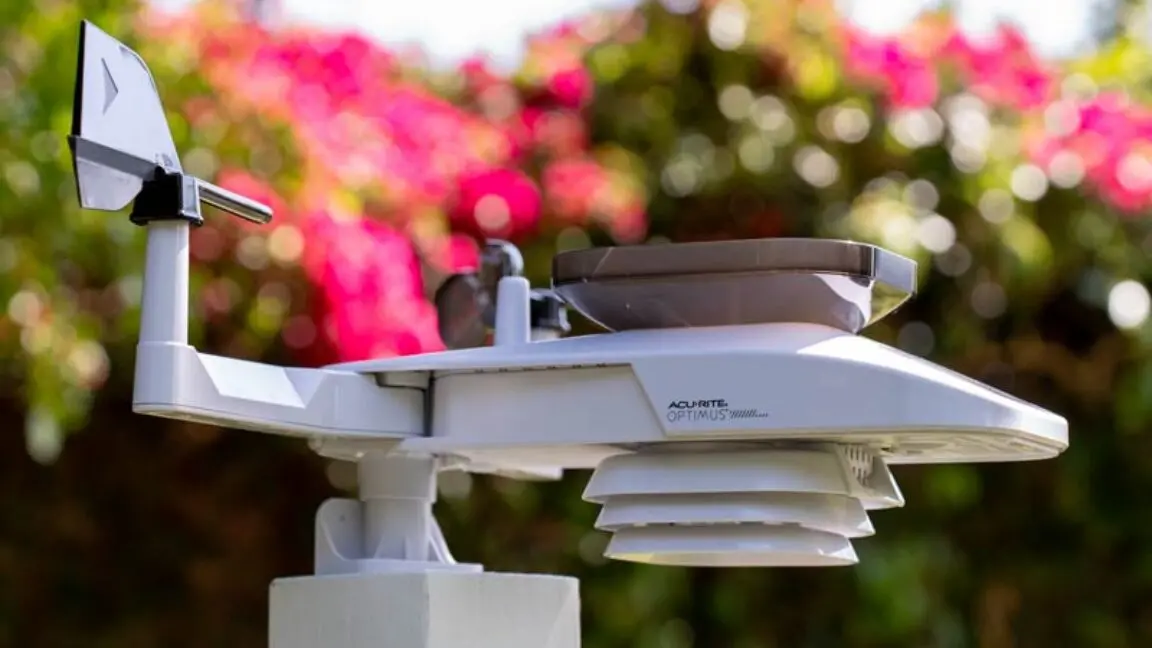
Smart weather monitoring device maker AcuRite has reversed course on its aggressive plan to force users off the My AcuRite app and onto the new AcuRite NOW application. Originally set for May 30, the shutdown has been postponed indefinitely after a wave of user frustration over the new app's shortcomings.
Jeff Bovee, AcuRite's vice president of product development, told Ars Technica that the transition “has raised serious questions and concerns among many long-time users.” The company now acknowledges that it moved too quickly and that the new app was not ready to replace the old one.
What Went Wrong with AcuRite NOW
AcuRite, which produces weather stations, rain gauges, and indoor thermometers, launched AcuRite NOW in June 2025 as a modern replacement for My AcuRite. The company cited the need for a broader connected-device platform supporting third-party gadgets and the Tuya SmartLife IoT ecosystem. But long-time users immediately noticed that AcuRite NOW lacked functionality they relied on daily.
Key missing features included the ability to rename multiple temperature sensors, report temperatures in non-integer values, and access an online dashboard. Users also complained about poor layout with wasted space, difficulties uploading data to weather services like Weather Underground, and a general lack of stability.
“For years our users lamented the lack of updates to the My AcuRite website and app, and our hands were tied on how to make those improvements,” Bovee said. “With the new AcuRite NOW app, the opportunities are wide open.” However, removing a functioning app before the replacement is fully baked risks alienating customers who have invested hundreds of dollars in hardware.
A Pattern of Missteps in Smart Home App Transitions
AcuRite's situation is strikingly similar to that faced by Sonos, which in 2024 attempted to replace its legacy controller app with a newly designed version. The Sonos app launch was plagued by missing features, audio dropouts, and slow performance, leading to a customer revolt, delayed product releases, and a significant drop in revenue. AcuRite appears to have dodged a similar fate by pausing its shutdown before the old app was disabled, but the damage to trust may already be done.
Forced software migrations are a recurring issue in the consumer electronics industry. Companies often justify them as necessary for technical innovation, security updates, or business model changes. But when the new software removes functionality or introduces bugs, users who paid for devices that “just worked” feel betrayed. Unlike a smartphone app update—which can be easily rolled back—a hardware-dependent app shutdown leaves customers with no choice but to accept the new product or abandon the ecosystem entirely.
Subscription Fees and Feature Gating
Another controversial aspect of AcuRite NOW is the introduction of a subscription fee to share data with Weather Underground, a feature that remains free in My AcuRite. While Bovee did not comment on whether other free features might become paid in the future, the move signals a shift toward recurring revenue—a strategy common among IoT companies seeking ongoing income after the initial hardware sale.
Users have expressed concern that once My AcuRite is eventually shut down, more essential features may be locked behind a paywall. AcuRite has not detailed the full pricing of AcuRite NOW beyond the Weather Underground data sharing, but the company has emphasized that the new platform will enable “future sustainability.” That phrase is often interpreted as a need for continuous subscription revenue to support cloud infrastructure and development.
No New Shutdown Date, But Migration Still Inevitable
As of now, AcuRite has not set a new date for sunsetting My AcuRite. Bovee stated, “The legacy platform still needs to be retired,” and promised that when a new date is set, users will be given ample notice and time to transition. The company is focusing its immediate efforts on improving AcuRite NOW's account setup, device onboarding, station connectivity, data visibility, app usability, notifications, and overall reliability.
One of the most requested features—a web-based dashboard—is still in development but no release date has been provided. Bovee noted that the web experience “is intended to be part of the AcuRite NOW platform and to include new features rather than simply duplicate the legacy My AcuRite dashboard.” This suggests that even when the web version arrives, it may not be a direct one-to-one replacement of what users are accustomed to.
Impact on User Trust and Brand Reputation
The decision to pause the shutdown likely prevents the worst-case scenario of a customer exodus, but it does not fully restore confidence. Many users who relied on My AcuRite for years feel that their investment in AcuRite hardware is now at risk of being diminished by a subpar software experience. The company's acknowledgement of “shortfalls” is a step forward, but users are watching closely to see if those shortfalls are actually fixed before the old app disappears.
AcuRite's situation also highlights a broader tension in the world of smart home devices: the line between device vendor and service provider is increasingly blurred. Consumers purchase physical products expecting them to function indefinitely, but companies often have different incentives—pushing new apps, subscriptions, and data-sharing agreements that may not align with user preferences. The backlash against AcuRite NOW is not just about missing buttons; it is a symptom of a deeper disconnect between corporate strategy and customer expectations.
What Users Can Do Now
For existing AcuRite device owners, the My AcuRite app remains operational, and there is no immediate deadline to switch. Users are encouraged to hold off on migrating to AcuRite NOW until they are satisfied that the new app meets their needs. Those who have already installed AcuRite NOW can continue using My AcuRite in parallel—the company has not disabled the old app. However, users should be aware that eventually the older app will be turned off, and they will need to transition.
AcuRite has also not indicated whether data from My AcuRite—such as historical weather logs—will be fully transferable to AcuRite NOW. This could be a major pain point for users who rely on long-term data analysis for gardening, solar energy management, or environmental tracking.
Lessons for the IoT Industry
AcuRite's experience offers a cautionary tale for any hardware company planning a mandatory app migration. The decision to kill a working legacy system before the replacement matches or exceeds its functionality nearly always backfires. Companies should prioritize feature parity, performance, and user feedback testing before sunsetting older platforms. They should also communicate transparently about changes to pricing or functionality.
Several smaller weather station makers have capitalized on AcuRite's missteps, with online forums seeing increased mentions of alternatives such as Ambient Weather and Ecowitt. Both companies offer local APIs and more flexible software choices—without requiring a forced migration to an app that charges for previously free features. The competitive landscape may shift if AcuRite cannot restore user trust quickly.
In the end, the AcuRite NOW debacle is a reminder that software is not just a delivery mechanism for hardware; it is the primary interface through which users experience a product. When that interface fails or changes abruptly, the entire product feels broken—no matter how well the sensors work.
Source:Ars Technica News