

Key Facts
- Apple Watch Ultra 4 is priced from $799 and went on sale after a September 2026 refresh.
- It uses the S11 chip with a 64-bit dual-core processor, 4-core Neural Engine, and 64GB storage.
- The 49mm titanium watch has a 1,245 sq mm LTPO3 display with up to 3,000 nits brightness.
- Battery life is rated at up to 50 hours, or up to 84 hours in Low Power Mode.
- It adds 5G, satellite communications, a second-generation Ultra Wideband chip, and a Health Sensing System.
- Apple kept the Ultra 3 design, so the Ultra 4 is a feature and internals update rather than a redesign.
- It is sold alongside the Apple Watch Series 12 and Apple Watch SE 3.
The fourth-generation Apple Watch Ultra arrives as Apple's most rugged and expensive smartwatch, aimed at outdoor athletes, divers, hikers, and endurance users who need more battery life, better connectivity, and more sport-specific performance than the standard Apple Watch can provide. The Apple Watch Ultra 4 follows the Ultra 3 that launched in September 2025, and it keeps the same 49mm titanium case while upgrading the processor, memory, health sensing hardware, satellite features, and battery endurance.
Because the watch was refreshed in September 2026, it sits at the beginning of its product cycle. Apple is not expected to introduce another Ultra model until 2027 at the earliest, which makes the current window a sensible buying period for anyone who wants the newest Ultra hardware. The starting price remains $799, positioning the Ultra 4 above the $399 Apple Watch Series 12 and the $249 Apple Watch SE 3.
Design and Durability
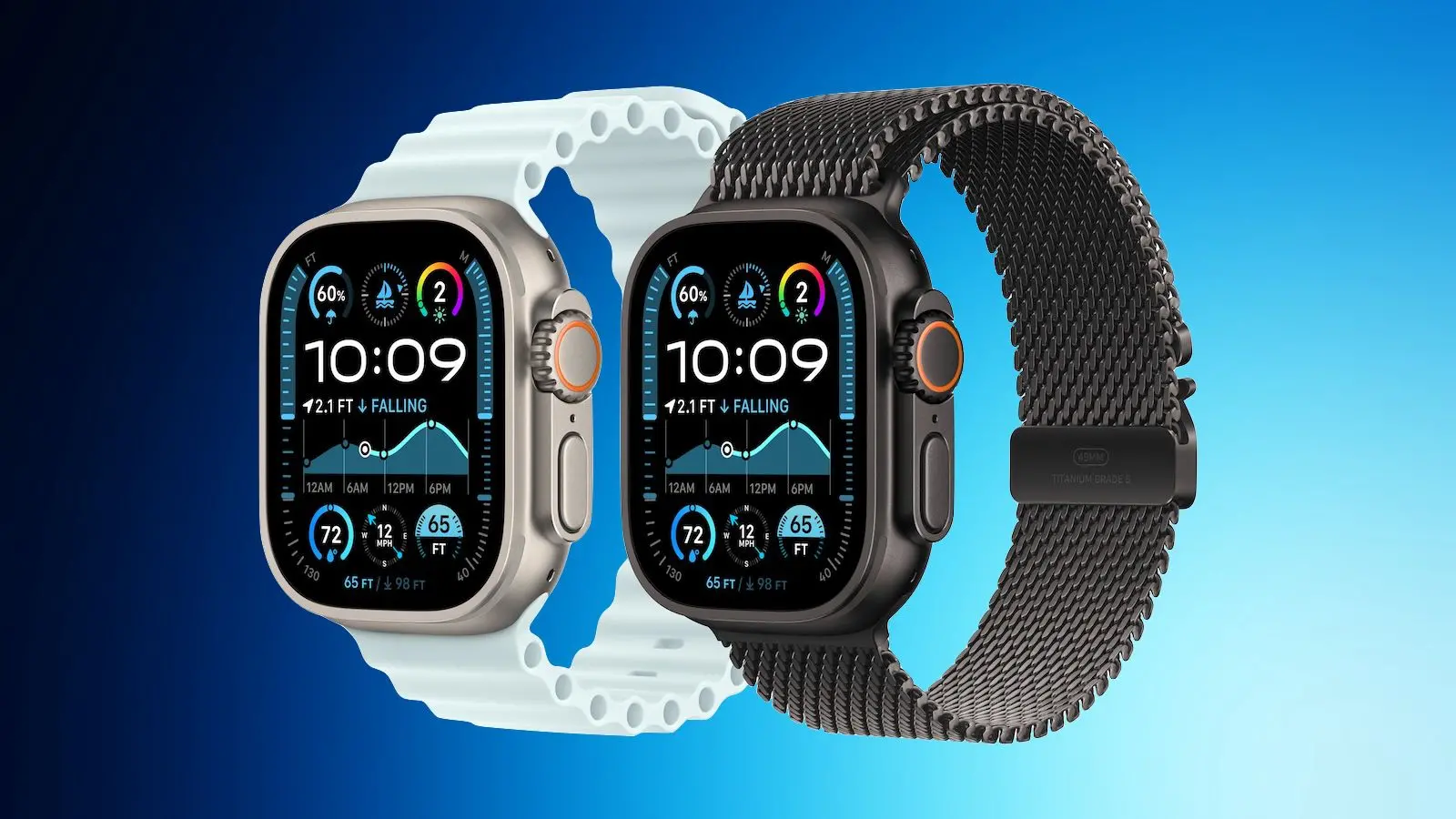
The Apple Watch Ultra 4 retains the familiar rounded rectangular shape of the standard Apple Watch, but it is built with a more rugged titanium chassis and a flat sapphire crystal face. Apple has not changed the external design compared with the Ultra 3. The case measures 49mm by 44mm by 12mm and weighs 63 grams, making it the largest and heaviest Apple Watch in the lineup. The Digital Crown has larger and coarser grooves than the standard models so it can be used with gloves, and the side button is also designed for gloved use.
The watch includes the international orange Action button on the left side. It is customizable and can launch workouts, mark segments, set Compass Waypoints, and perform other assigned tasks. The bright color is intended to make the button easy to find in dark conditions and underwater. The raised pill-shaped housing around the Digital Crown and side button helps protect those controls from impacts.
Apple offers the Ultra 4 in Natural Titanium and Black Titanium, both with a satin finish. The black version uses a custom blasting process and a diamond-like carbon coating to improve scratch resistance. The titanium case is 3D printed with aerospace-grade titanium powder, a process that builds the case layer by layer and uses less material than traditional forging. The watch is certified to MIL-STD-810H and is tested for low pressure, high temperature, low temperature, temperature shock, fluid contamination, rain, humidity, immersion, sand and dust, freeze and thaw, ice and freezing rain, shock, and vibration.
Water resistance remains a major selling point. The Apple Watch Ultra 4 is rated to WR100 and EN 13319, the latter an internationally recognized standard for diving accessories. It can be used for kitesurfing, wakeboarding, and recreational scuba diving to 40 meters, activities that are not recommended for standard Apple Watch models. The watch also works across a wider temperature range than regular Apple Watch models, from -4 degrees Fahrenheit to 131 degrees Fahrenheit.
Display and Watch Faces
The Apple Watch Ultra 4 uses a 1,245 sq mm LTPO3 wide-angle OLED display with a resolution of 422 by 512 pixels. It can reach up to 3,000 nits of brightness and dim to 1 nit in dark rooms, which allows for an always-on second hand. The display area is slightly larger than the 46mm Apple Watch Series 12, which has a 1,220 sq mm screen.
Apple continues to offer Ultra-specific watch faces. The Wayfinder face includes a time dial that can transform into a compass and has room for up to eight complications. It includes a night mode that turns red for better visibility in the dark, and that mode can be activated manually or automatically. The Modular Ultra face uses the outermost edge of the display for real-time data such as seconds, altitude, or depth, and it offers more complications than any other Apple Watch digital face.
S11 Chip and Audio Intelligence
The S11 chip is Apple's most powerful wearable chip in the Ultra 4, with a 64-bit dual-core processor, a 4-core Neural Engine, and 64GB of storage. Apple says the chip enables new Audio Intelligence features, Siri AI, the Health Sensing System, and more accurate step counts. The S11 includes a Secure Exclave, a hardware-isolated compartment designed to process audio separately from the rest of the system.
Audio Intelligence includes four main options. Sound Recognition alerts users to nearby sounds such as sirens, alarms, doorbells, or a baby crying. Live Rewind can recall what was just said by showing a transcript of the previous 15 seconds when the user presses the Digital Crown twice. Siri Recap creates high-level summaries of conversations during the day, with a title and key points stored in the Siri app. Shazam identifies music playing nearby and displays the song title and artist in the Music Recognition widget in the Smart Stack.
These features are opt-in. Apple says Siri Recap does not attribute statements to specific speakers, does not record raw audio because of the Secure Exclave, does not create full conversation transcripts, and does not transcribe potentially harmful content or sensitive data. Raw audio is said to be inaccessible and deleted after processing. Apple plans to implement Audio Intelligence later this year.
The S11 chip also supports gestures. Single tap lets users open a widget in the Smart Stack by tapping the index finger and thumb together. Double tap can answer or end calls, open notifications, play or pause music, start or stop timers, and control third-party apps. Wrist Flick lets users dismiss incoming notifications and calls with a flick of the wrist.
Health Sensing and Fitness Features
The Apple Watch Ultra 4 introduces a Health Sensing System with a second-generation electrical heart sensor, an always-on optical heart sensor with larger and more power-efficient green LEDs, a blood oxygen sensor, and a temperature sensor. Apple says the Ultra 4 and Series 12 have the most accurate heart rate sensing in a wearable device. The optical sensor takes heart rate readings every five seconds throughout the day, which Apple says improves calorie burn, resting heart rate, heart rate variability, and heart rate irregularity measurements. HRV is measured up to 24 times more often than before.
The new Readiness metric analyzes recent activity, training load, vitals, and sleep score to produce a 0 to 10 score each morning. The score comes with one of four recommendations: Recover, Pace Yourself, Ready, or Go For It. Readiness is not static and can change throughout the day as new health data arrives. Apple also redesigned the pedometer model with new machine learning algorithms, and the S11 chip supports more accurate step counts and indoor distance measurements for walking and running workouts.
Hypertension alerts are available by analyzing heart rate data over 30 days. The watch cannot measure specific systolic and diastolic blood pressure, but it looks for patterns that may indicate hypertension. After an alert, users can provide seven days of blood pressure cuff readings before contacting a doctor. The watch also supports single-lead ECGs through electrodes in the back and the Digital Crown. An ECG can detect sinus rhythm, an abnormal result, or an inconclusive result and can identify atrial fibrillation at certain heart rates.
Sleep tracking monitors time spent in REM, Core, and Deep sleep, along with awakenings and sleep duration. A Sleep Score combines duration, bedtime consistency, wake frequency, and time spent in each sleep stage. The Ultra 4 can also detect signs of sleep apnea by using the accelerometer to sense small wrist movements associated with interruptions in normal breathing patterns. Sleep apnea data is analyzed over 30 days and can be viewed in the Health app on iPhone.
Crash Detection uses motion sensors and a sensor-fusion algorithm to detect a severe car crash. The watch checks in with the user and automatically calls emergency services if there is no response after a 10-second countdown. Temperature sensors measure wrist temperature and ambient air temperature. The wrist sensor is used for women's health, including retrospective ovulation estimates and improved period predictions. Blood oxygen monitoring is available, though in the United States the data can only be viewed on iPhone due to an ongoing legal dispute. In other countries, readings are available on the watch itself.
Adventure and Activity Tools
The Apple Watch Ultra 4 includes a Depth app that uses the onboard depth gauge to show current depth, water temperature, duration underwater, and maximum depth reached. Apple has partnered with Huish Outdoors for the Oceanic+ app, which turns the watch into a dive computer with dive planning, dive metrics, visual and haptic alerts, a no-decompression limit, ascent rate, safety stop guidance, and the Bühlmann decompression algorithm.
A dedicated Tides app provides high and low tide information, rising and falling tides, tide height and direction, and sunrise and sunset times. The Compass app offers an analog compass view with bearing, elevation, incline, latitude, and longitude. Users can drop waypoints with the Action button or the Compass Waypoint option, and those waypoints update dynamically relative to the watch's position. The Backtrack feature uses GPS to record a path so users can retrace their steps if they become lost.
The Apple Watch Ultra 4 includes dual-frequency GPS with L1 and L5 frequencies plus new positioning algorithms. Apple says it provides the most accurate GPS of any Apple Watch, with precise distance, pace, and route data for training and competition. The L5 frequency is designed to perform better in urban environments and areas with trees and other obstacles.
Battery Life and Charging
Battery life is one of the biggest upgrades. The Apple Watch Ultra 4 lasts up to 50 hours on a single charge, compared with 42 hours for the Ultra 3. With Low Power Mode and an additional battery-saving option that reduces heart rate measurements during workouts, battery life can stretch to 84 hours for multi-day adventures. The watch lasts up to 18 hours with outdoor workout tracking, up to 25 hours in Extended Workout mode with full GPS and heart rate readings, and up to 45 hours in Max Extended Workout mode with GPS readings every second.
Fast charging is supported through an upgraded braided charging cable and charging puck. Apple says the Ultra 4 can charge to 80 percent in 45 minutes, which is faster than the Ultra 3. A 15-minute charge provides up to 18 hours of battery life when using the included charging puck.
Connectivity and Safety
All Apple Watch Ultra models include cellular connectivity, and the Ultra 4 supports 5G in multiple countries, with LTE in some areas. A carrier plan is required to use cellular features. The watch can connect to cellular networks without an iPhone nearby for internet access, though the cellular plan itself is linked to an iPhone plan.
Satellite connectivity is exclusive to the Ultra 4 in the Apple Watch lineup. When Wi-Fi and cellular are unavailable, users can contact emergency services, send messages to friends and family, and share their location through Find My. Emergency SOS via satellite works without a cellular plan, while sending messages and sharing location require an active cellular plan. Satellite connectivity is currently free. Find My via satellite can send a location once every 15 minutes to selected contacts, and Messages via satellite supports texts, emoji, and tapback reactions with contacts from the last 30 days.
The watch includes a W3 Apple wireless chip, a second-generation Ultra Wideband chip, and Bluetooth 5.3. The UWB chip supports Precision Finding for locating a misplaced iPhone with visual, haptic, and audio guidance. It also enables Car Keys, AirTag tracking, and HomePod media controls when the watch is within four meters of a playing HomePod. An 86-decibel emergency siren can be activated by pressing and holding the Action button or side button, and Apple says it can be heard up to 600 feet or 180 meters away. It uses two alternating patterns, including a distress pattern and the universally recognized SOS pattern.
Buying Advice and Comparisons
The Apple Watch Ultra 4 starts at $799 and can be ordered from Apple and other retailers. It is the largest Apple Watch at 49mm, so buyers with smaller wrists should try it on before purchasing. Anyone who does not need the Ultra feature set, satellite connectivity, siren, dive support, or extended battery life should consider the Apple Watch Series 12, which starts at $399 and comes in 42mm and 46mm sizes. The Series 12 lacks satellite connectivity and a siren, has a shorter battery life, and uses a less rugged casing.
The Apple Watch SE 3 starts at $249 and serves as the low-cost option. It has an older design and lacks some health sensors, including the blood oxygen sensor and the ECG app. The Ultra 4 also supports three sport-focused bands, including the Trail Loop, Alpine Loop, and Ocean Band, and it fits bands designed for 44mm, 45mm, and 46mm Apple Watch models.
What Comes Next for the Apple Watch Ultra
Apple is not expected to redesign the Apple Watch Ultra until 2028 at the earliest. The company is working on noninvasive blood glucose monitoring for a future Apple Watch, but that feature is still several years away. Apple is also considering LG Display's high-mobility oxide thin-film transistor technology for a future Apple Watch OLED display in 2027. Compared with current LTPO technology, high-mobility oxide can increase electron mobility for lower power consumption. A future Apple Watch could also include Touch ID, either under the display or integrated into the side button, which would reduce reliance on numerical passcodes for unlocking.
Source:MacRumors News