

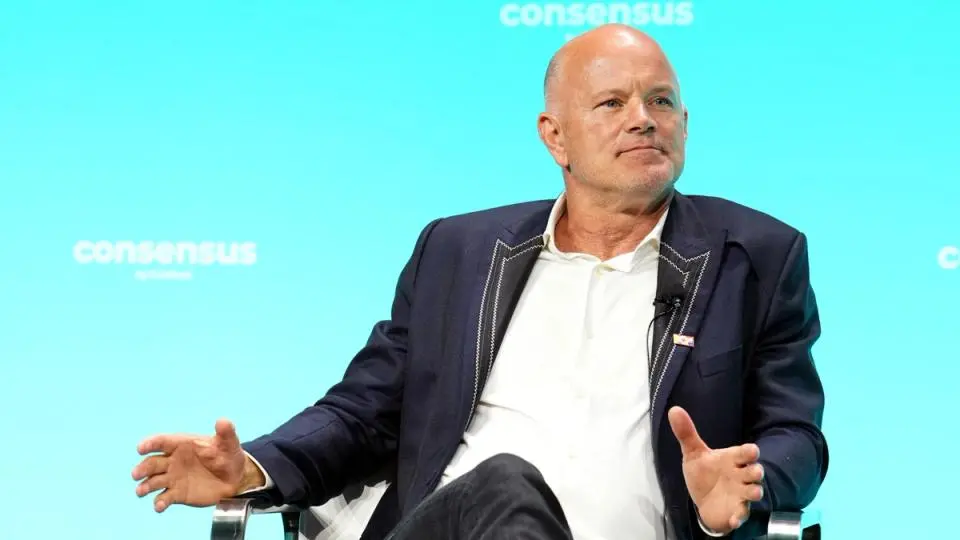
Galaxy Digital, the crypto financial services firm led by Mike Novogratz, has unveiled a new product aimed at bringing institutional-grade stablecoin yield generation into the decentralized finance (DeFi) ecosystem. The firm launched Galaxy Curator, a platform built on the Morpho lending protocol that gives Fireblocks&x27; 2,400 institutional clients access to curated onchain yield strategies. This move marks a significant step in bridging the gap between traditional finance and DeFi, as institutions increasingly seek ways to generate returns on their idle stablecoin holdings without compromising security or regulatory compliance.
Background: The Institutional Demand for DeFi Yield
The launch of Galaxy Curator comes at a time when institutional interest in digital assets is maturing beyond simple buy-and-hold strategies. Stablecoins such as USDC, USDT, and DAI have become ubiquitous in crypto markets, serving as a medium of exchange and a store of value. However, these assets typically sit idle in custodial wallets, earning no yield. Traditional financial institutions face significant hurdles in deploying these funds into DeFi protocols due to concerns about smart contract risk, liquidity fragmentation, and lack of oversight.
Galaxy Digital has positioned itself as a leader in the institutional crypto space since its founding in 2017. The firm offers trading, asset management, and advisory services, with a strong focus on bridging traditional finance and blockchain technology. By launching Galaxy Curator, the firm is directly addressing the demand for regulated, risk-managed DeFi exposure. The platform leverages Morpho, a decentralized lending protocol known for its efficiency and composability, to offer curated vaults that apply Galaxy&x27;s own risk framework.
How Galaxy Curator Works
Galaxy Curator is designed to simplify the process of earning stablecoin yield for institutional clients. Through a partnership with Fireblocks, a leading digital asset custody and payments platform, over 2,400 institutions—including hedge funds, asset managers, and corporations—can access Galaxy&x27;s curated vaults directly from their existing Fireblocks accounts. This integration eliminates the need for institutions to manage private keys, interact with smart contracts directly, or navigate the complexities of DeFi protocols.
The vaults operate on Morpho, a protocol that aggregates liquidity from the popular Aave and Compound protocols. Morpho optimizes lending rates by matching borrowers and lenders directly, improving capital efficiency. Galaxy Curator goes a step further by applying Galaxy&x27;s institutional risk framework to each vault. This includes strict collateral standards, exposure limits, and continuous market monitoring to mitigate risks such as liquidation cascades, oracle manipulation, and market volatility.
Assets deposited into the vaults remain at the protocol level, meaning Galaxy does not take custody. Instead, the firm curates the lending pools and strategies, ensuring that only high-quality collateral types are accepted and that exposure is diversified across multiple protocols and assets. This approach allows institutions to retain ownership of their assets while benefiting from professional management and due diligence.
The Two Vault Products
Galaxy is debuting two distinct vault products, each tailored to different risk-return profiles and client preferences. The first is the Quality Vault, which is focused on capital preservation and safety. This vault accepts only the most liquid and widely accepted stablecoins, such as USDC and USDT, and lends them against blue-chip collateral like ETH and WBTC. The Quality Vault targets modest but reliable yields, typically in the low-to-mid single digits, with a strong emphasis on minimizing principal risk.
The second product is the Enhanced Vault, which aims for higher yields by deploying capital into more innovative DeFi assets. This vault can invest in liquid restaking tokens (LRTs) from platforms like EigenLayer, Pendle principal tokens—which represent the yield-bearing portion of fixed-term lending positions—and products from the Ethena protocol, including its synthetic dollar, USDe. These assets carry additional risks but offer the potential for double-digit yields. Galaxy applies the same risk framework but adjusts parameters to account for the higher volatility and lower liquidity of these assets.
Both vaults are denominated in stablecoins, and all yields are paid out in the same stablecoin, avoiding additional volatility for clients. The minimum investment thresholds and lock-up periods are structured to meet institutional requirements, with daily liquidity available for the Quality Vault and slightly longer redemption periods for the Enhanced Vault.
Galaxy&x27;s Risk Framework in Practice
One of the key selling points of Galaxy Curator is the application of Galaxy&x27;s institutional risk framework to DeFi lending. This framework was developed over years of operating in both traditional markets and crypto, and it includes several layers of protection. First, collateral standards are defined by Galaxy&x27;s research team, which evaluates each asset&x27;s market capitalization, trading volume, historical volatility, and degree of decentralization. Only assets that meet stringent criteria are accepted as collateral.
Exposure limits are also enforced per vault, per protocol, and per asset class. For example, the Quality Vault cannot allocate more than a certain percentage of its portfolio to a single borrower or to a single protocol other than Morpho. Market monitoring is conducted in real-time by Galaxy&x27;s risk team, which can trigger automated rebalancing or withdrawal if certain thresholds are breached, such as a sharp drop in collateral value or a spike in borrowing demand.
Additionally, Galaxy has integrated insurance mechanisms where available, such as coverage from Nexus Mutual or Unslashed Finance, to further protect against smart contract exploits. While no investment is risk-free, Galaxy aims to reduce the likelihood of catastrophic losses that have historically deterred institutions from DeFi.
Implications for the DeFi Ecosystem
The launch of Galaxy Curator is likely to accelerate the adoption of DeFi by institutional investors. By providing a trusted intermediary that handles curation, risk management, and compliance, Galaxy lowers the barrier to entry for firms that were previously wary of self-custody and smart contract risks. Furthermore, the partnership with Fireblocks means that institutions can access these strategies without changing their existing custodial setup, reducing operational friction.
From a broader market perspective, the vaults could increase the total value locked (TVL) in DeFi protocols like Morpho, Aave, and Compound, as institutional capital flows in. This liquidity can improve lending rates and stability for all users. Additionally, the Enhanced Vault&x27;s focus on novel assets like LRTs and Pendle tokens may help legitimize these emerging sectors, attracting more development and liquidity.
Galaxy&x27;s move also signals a trend: traditional financial intermediaries are beginning to wrap DeFi products in institutional-friendly packages. Other firms, such as Coinbase with its Base network and institutional staking products, and Goldman Sachs-backed ClearPark, are pursuing similar strategies. The race to capture institutional stablecoin yield is heating up.
Competitive Landscape and Future Outlook
Galaxy faces competition from several fronts. Native DeFi protocols like Yearn Finance already offer automated yield optimization for retail and some institutions, but they lack the institutional risk controls and regulatory compliance that Galaxy provides. Firms like CoinShares and Grayscale have also launched DeFi-related products, but often in the form of passive index funds rather than active vault management. Galaxy&x27;s key differentiator is its active curation and risk framework, which aligns with the needs of sophisticated investors who demand transparency and oversight.
Looking ahead, Galaxy plans to expand the Curator platform to include additional vaults with different risk profiles and asset classes. The firm is also exploring the integration of liquid staking tokens (LSTs) from Ethereum and other proof-of-stake blockchains, as well as real-world asset (RWA) tokens that tokenize traditional financial instruments like bonds and treasuries. These expansions could further diversify the yield sources available to institutions.
The success of Galaxy Curator will depend on several factors: the performance of its vaults relative to benchmarks, the ability to maintain high security standards, and the continued growth of Fireblocks&x27; client base. If institutions see consistent returns without major incidents, the platform could become a cornerstone of institutional participation in DeFi.
In the meantime, Galaxy&x27;s announcement has been met with positive reactions from the crypto community. Analysts note that the vaults could help absorb some of the excess stablecoin supply in the market, potentially reducing downward pressure on prices. However, critics caution that DeFi lending cycles can be volatile, and even well-curated vaults are not immune to black swan events, such as a sudden collapse of a major collateral asset. Galaxy acknowledges these risks and emphasizes that its vaults are designed for long-term, diversified exposure rather than speculative short-term gains.
Overall, the launch of Galaxy Curator marks a maturation of the DeFi industry. It demonstrates that decentralized protocols can be integrated into institutional workflows when proper safeguards are put in place. As more firms follow Galaxy&x27;s lead, the line between traditional finance and decentralized finance may continue to blur, opening up new opportunities for yield generation and capital efficiency across the global financial system.
Source:Coindesk News