

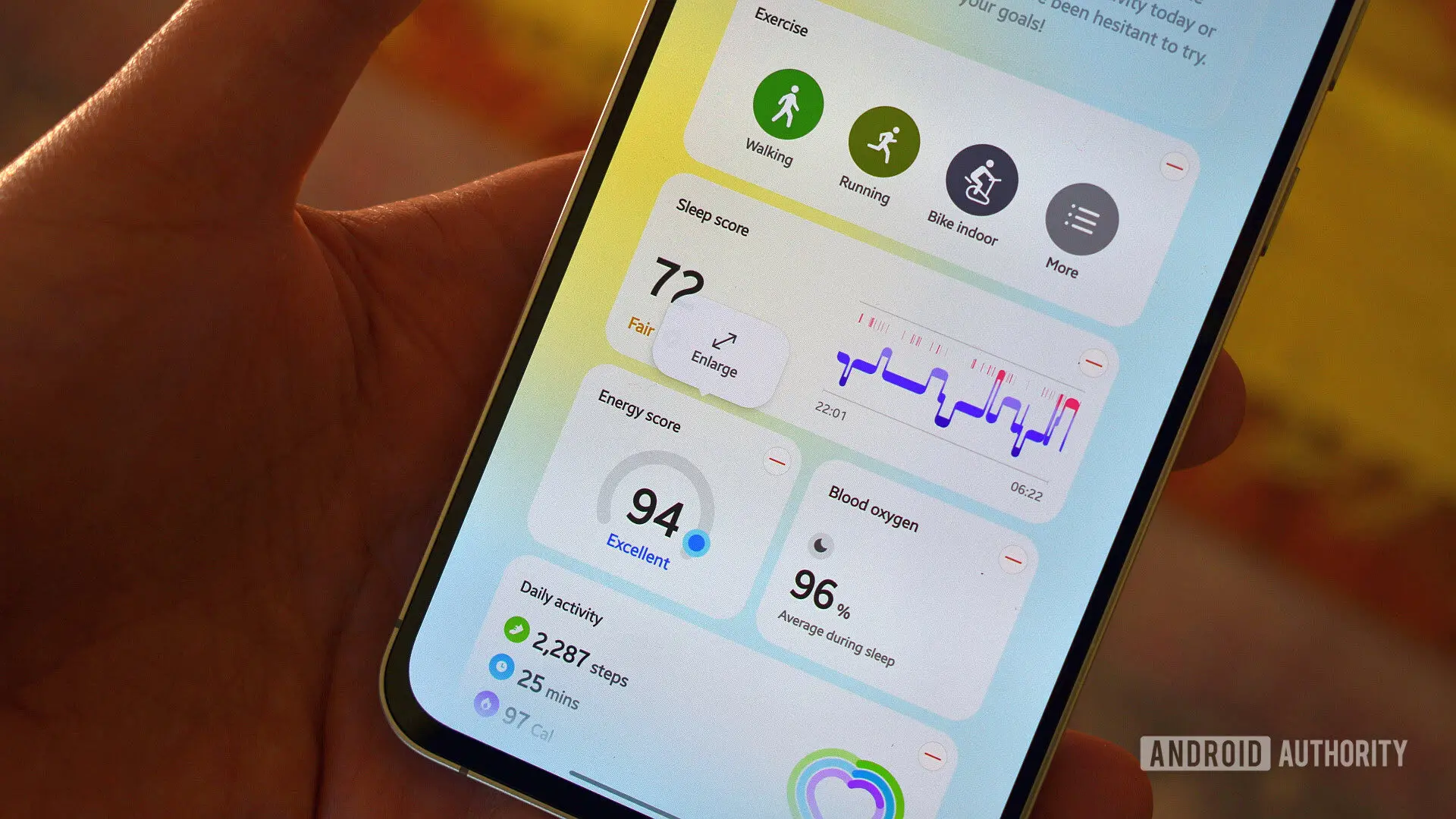
Samsung Health, one of the most popular health-tracking applications on Android, recently stirred a wave of concern among its users. A new pop-up appearing when users tried to toggle off AI training consent warned that choosing not to share health data for artificial intelligence training would result in the deletion of previously uploaded health data and would prevent syncing of new health data. The warning seemed to imply that opting out would cripple the app's core functionality. However, after significant user backlash, Samsung has stepped in to clarify the situation.
Understanding the Warning
The warning in question was displayed when users navigated to the AI training consent settings within Samsung Health. The text stated that opting out would lead to the deletion of health data and disable new data syncing. Naturally, this alarmed many users who rely on the app to track their fitness, sleep, and overall wellness. Social media platforms quickly filled with complaints and confusion, with users feeling that Samsung was coercing them into allowing AI training by threatening the loss of their data.
Samsung's Clarification
In a statement shared with SamMobile, Samsung explained that the ill-worded warning referred only to data that is separately collected and used for AI development purposes. The company emphasized that health data stored for the use of Samsung Health services—such as step counts, heart rate logs, and sleep scores—remains untouched. In other words, the data that populates the user's dashboard and history is not affected by the AI training opt-out.
According to Samsung, the health data retained for AI training is a distinct subset. When a user revokes consent, only that subset is deleted. The company's clarification page lists several categories of health data that may be used for AI training, including:
- Health and wellness data: body measurements, nutrition, step count, activity, and sleep data
- Medication data: prescriptions, dosages, and related information
- Health records: medical and clinical data like diagnoses, test results, and treatment histories
- Cycle tracking data: menstrual cycle data, physical conditions, and physiological indicators like heart rate
Importantly, this data is stored separately and is not what users see in their everyday Samsung Health interface. The company stated that revoking AI training consent will not disrupt the normal operation of the app, and testing by SamMobile confirmed that syncing and data retention continue to work after opting out.
Why the Confusion?
The core issue lies in poor wording. The original warning came across as a blanket statement: 'your health data will be deleted.' Without proper context, users naturally assumed it meant all of their health data. This kind of language can erode trust, especially in an era where data privacy is a top concern. Samsung acknowledged the problem and said it is working on improving the notice text to be clearer.
The incident highlights a broader tension between user privacy and the data-hungry nature of modern AI development. Companies like Samsung collect vast amounts of user data to train their machine learning models, which in turn improve features like personalized fitness recommendations and sleep pattern analysis. However, when the opt-out process is confusing or threatening, it can backfire spectacularly, leading to user backlash and regulatory scrutiny.
Background on Samsung Health and AI
Samsung Health has long been a key component of the Galaxy ecosystem, tracking everything from steps to stress levels. Over the years, Samsung has integrated more AI-driven features, such as activity recognition, calorie estimation, and sleep coaching. These features rely on data analysis to improve accuracy and provide personalized insights. For instance, the app's sleep coaching feature uses AI to analyze sleep cycles and offer customized tips.
To train these models, Samsung needs large datasets that reflect real-world usage. The company has always allowed users to opt out of data sharing for AI training, but the recent warning caused many to question whether that choice was truly voluntary. The clarification should restore some confidence, but it also raises questions about how other apps handle similar consent.
The Importance of Clear Consent Practices
This incident serves as a reminder of how crucial transparent communication is when asking users for permission. Privacy policies are often long and hard to parse, but in-app messages like the one in Samsung Health carry immediate weight. If a user sees a warning that says 'your data will be deleted,' they are likely to interpret it literally. Companies must ensure that their language is precise and that users understand exactly what they are consenting to—or opting out of.
Samsung's response—acknowledging the issue and promising to fix the text—is a step in the right direction. However, it would have been better to avoid the controversy altogether by testing the wording with real users before rolling it out. The incident also demonstrates the power of user feedback; within days, Samsung was forced to clarify its position and commit to improvements.
What Users Should Do Now
For Samsung Health users who are concerned about privacy, the current takeaway is straightforward: opting out of AI training will not delete your personal health data, and the app will continue to function normally. If you wish to revoke consent, you can do so without fear. You may also want to review Samsung's full privacy policy to understand how your data is stored and used.
Moreover, this incident underscores the importance of regularly checking app permissions and data-sharing settings. As more devices and apps incorporate AI, users need to stay informed about how their information is being utilized. Samsung's clarification should alleviate immediate worries, but the broader conversation about data privacy in the age of AI is far from over.
In light of this, Samsung is expected to roll out an update to Samsung Health in the coming weeks that will include clearer language in the consent dialog. The company has also vowed to provide more detailed explanations on its support pages about the difference between 'AI training data' and 'health service data.' This transparency will help users make informed decisions.
Ultimately, the Samsung Health AI opt-out episode demonstrates that even well-intentioned features can cause distress if not communicated clearly. The tech industry as a whole can learn from this: user trust is fragile and must be earned through honest, unambiguous interactions. As AI continues to permeate health and wellness apps, developers must prioritize clarity over complexity.
Broader Implications for AI and Privacy
The Samsung Health case is not isolated. Major tech companies have faced similar controversies when users felt misled about data usage. For example, Strava faced backlash when it revealed that its heat maps could expose military bases, and Fitbit has had to clarify its data-sharing practices with Google. Each incident chips away at public trust, making it harder for companies to collect the data needed to improve AI models.
Regulators around the world are taking notice. The European Union's General Data Protection Regulation (GDPR) already requires clear consent for data processing, and similar laws are emerging in places like Brazil and India. Companies that fail to communicate clearly risk fines and reputational damage. Samsung's quick clarification and promise to improve are likely aimed at avoiding regulatory scrutiny.
For users, the takeaway is to always read the fine print—or at least the pop-ups. But also, companies should make the fine print unnecessary by writing in plain language. Samsung's misstep could have been avoided entirely if the initial warning had simply said: 'Opting out of AI training will delete only the data we use to improve our AI models. Your personal health data will remain intact, and all features will continue to work.'
The Road Ahead
Samsung Health remains a powerful tool for millions of users. With over 64 million monthly active users as of 2025, its influence is significant. The app continues to evolve, adding features like body composition analysis, stress management, and even blood glucose monitoring on select devices. As it becomes more sophisticated, the need for clear privacy communication will only grow.
The company's response to this controversy suggests it is listening to its user base. By promising to update the notice text, Samsung is acknowledging that user experience extends beyond features and into trust. This incident will likely be remembered as a minor blip in Samsung Health's history, but it serves as an important lesson for the entire tech sector: when it comes to data privacy, precision is paramount.
In the end, users can rest assured that opting out of AI training in Samsung Health will not delete their precious step logs, sleep records, or workout history. The only data removed is the copy used behind the scenes to train algorithms. And if Samsung follows through on its promise to write better alerts, future users won't have to experience the same confusion.
As of now, the app continues to function exactly as before for those who choose to opt out. Samsung's damage control has been effective, but the incident will likely prompt other app developers to double-check their own consent dialogs. If anything good comes from this confusion, it is a renewed focus on transparent user communication in the health and fitness industry.
With the clarified policy, Samsung Health users can continue to enjoy the app's comprehensive tracking and AI-driven insights, or choose to forgo the AI training without penalty. The choice is now truly theirs, backed by a clear understanding of what that choice entails.
Source:Android Authority News