



















Strategic Land Dynamics Around Jewar Airport


As the Noida International Airport project takes shape in Jewar, its impact on regional land dynamics is becoming more complex than headline narratives suggest. Anyone looking at plots in Jewar near Jewar Airport needs more than price speculation and infrastructure hype. What matters now is reading the granular patterns of land-use classification, development phasing, and rural-to-urban transitions driven by policynot promise.
Most attention has been on air connectivity and expected economic uplift, but little is said about the investment friction points that are surfacing as the airport zone expands. Thats where deeper clarity becomes essential for individuals considering Investing Near Jewar Airport. This article explores four less-discussed but highly influential factors that will define how the region actually evolves.
Zoning Reclassifications are Ongoingand Highly Uneven
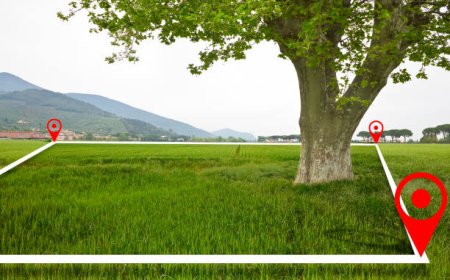
Not all land around Jewar is equal, even if it is within a few kilometers of the airport perimeter. The area is divided into distinct planning sectors governed by the Yamuna Expressway Industrial Development Authority (YEIDA), which is executing reclassification in stages. While some plots have been re-zoned for residential or industrial purposes, others remain designated as agricultural, with no clear timeline for change.
The implications are significant. A piece of land may appear developable, yet fall under a zoning category that prohibits construction. Reclassification decisions depend on factors like road access, proximity to planned infrastructure, and environmental constraints such as floodplains or eco-sensitive areas. Understanding the precise zoning status of each sector, including recent updates from YEIDA's planning department, is key before assuming any future usability.
Timeline of Utility Rollouts Alters Land Viability
Official master plans typically promise basic infrastructureroads, water, electricity, drainagebut these are not deployed uniformly across all sectors. Instead, utilities are rolled out based on sector priority, which follows land acquisition status, contractor mobilization, and budget approvals.
In some areas, roads are already laid but electricity connections are still years away. Others may have power infrastructure in place but no sewage lines, making residential development infeasible. These variations drastically affect the actual development readiness of a plot, regardless of location. Its important to track public tenders, contractor assignments, and government progress reportsnot just layout maps.
Fragmented Land Ownership and Disputed Titles
Jewar and its surrounding villages are composed of multi-generational farmlands with fragmented ownership records. As real estate interest grows, so do disputes over boundaries, shared titles, and inheritance claims. In areas undergoing urban integration, this complexity increases, particularly where traditional land division practices clash with formal registration systems.
Some investors acquire land through General Power of Attorney (GPA) transactions, which do not confer true ownership in court. Others rely on village-level agreements not recognized by state authorities. Without proper vetting of ownership history, even prime-looking plots carry legal ambiguity. Official mutation records (daakhil-kharij), Khasra numbers, and jamabandi (record of rights) are critical documents to verifynot optional paperwork.
Socio-Economic Shifts are Redrawing Land Demand
An under-discussed variable is how demographic and livelihood shifts are shaping land value from the ground up. Villages near the airport site are seeing transitions from agrarian to mixed economiessmall-scale manufacturing, warehousing, transport serviceswhich is driving micro-commercial development in non-central pockets.
This results in nonlinear price appreciation: some non-contiguous clusters suddenly attract higher demand due to service economy development, while others closer to the airport stagnate due to policy hold or disputed ownership. Understanding local livelihood trendssuch as migration patterns, education centers, and warehousing licensesprovides better land insight than proximity alone.
Transit-Oriented Development Is Not Yet Fully Aligned
The future of Jewars real estate market is also tied to how metro rail, expressway links, and freight corridors converge in designnot just in plan. As of now, Phase 1 of the metro is confirmed up to Greater Noida, but further extensions to Jewar remain unapproved at the funding level.
This gap between planned and implemented transit means that land purchased with the assumption of nearby metro connectivity may face a longer wait. Similarly, expressway interchanges and logistics zones are unevenly integrated into the local road grid. These mismatches can affect both short-term resale prospects and long-term development quality.