

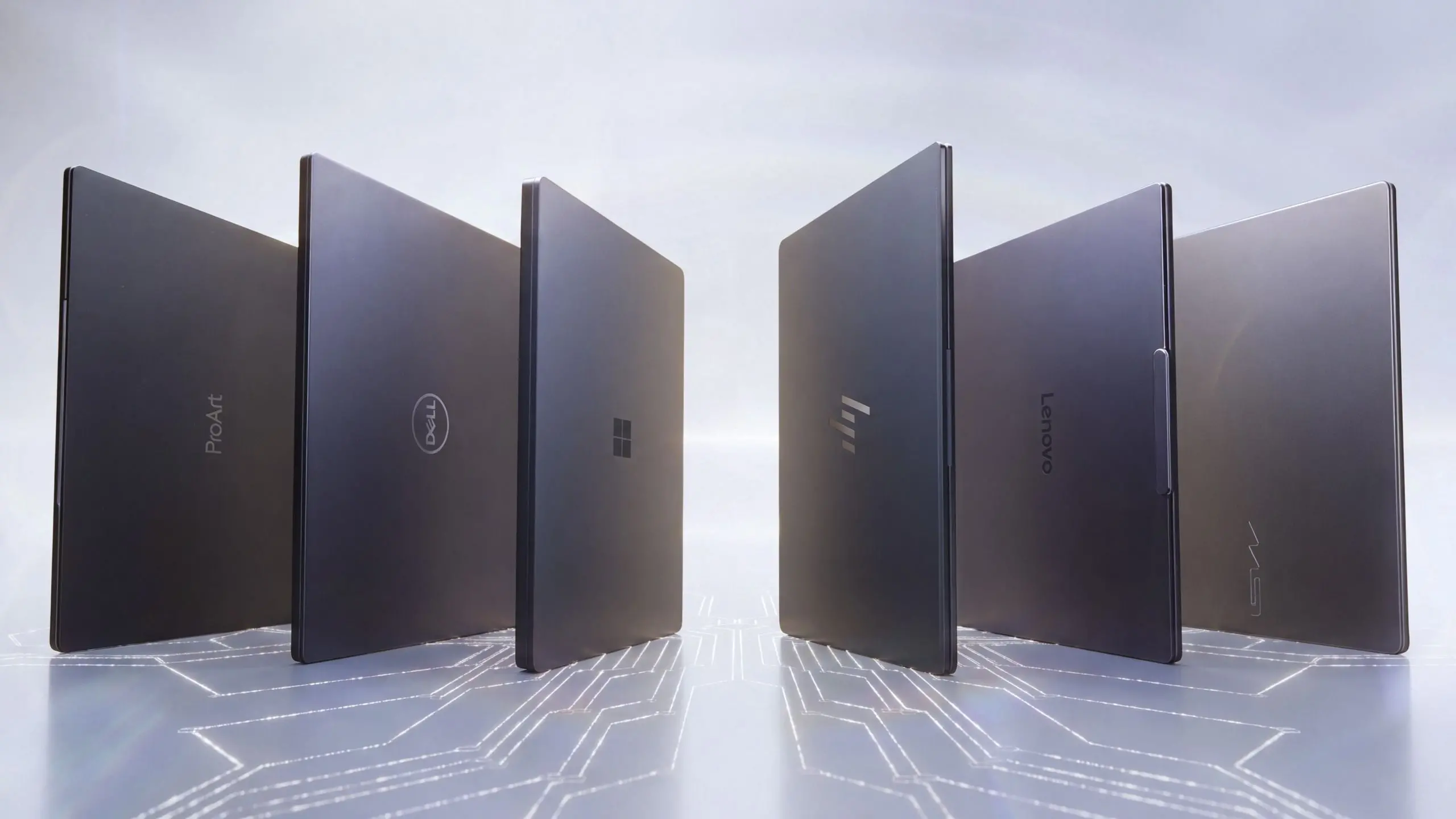
NVIDIA RTX Spark Officially Launches, Targets AI and Gaming Laptops
NVIDIA has quietly expanded its RTX family with the launch of the RTX Spark, a new line of mobile graphics processors aimed at users who demand both AI-driven productivity and high-fidelity gaming on the go. The first laptops featuring the RTX Spark are now available through retailer Antonline, marking the beginning of a broader rollout expected across major OEMs in the coming months.
The RTX Spark represents NVIDIA's latest attempt to bridge the gap between professional AI workloads and consumer gaming needs. Built on an updated architecture, the new GPU series promises significant gains in tensor performance, ray tracing efficiency, and power management—all critical for thin-and-light laptops that must balance thermal constraints with raw computational muscle.
What Is the RTX Spark?
The RTX Spark is a mobile GPU family that sits between NVIDIA's mainstream RTX 40-series and the professional RTX Ada lineup. It introduces dedicated AI acceleration cores—dubbed "Spark Cores"—that are optimized for inference tasks, machine learning model training, and real-time data processing. According to NVIDIA, these cores deliver up to 2.5x the AI throughput of the previous generation while consuming 30% less power at equivalent performance levels.
Key architectural improvements include:
- Enhanced Tensor Cores: Fourth-generation tensor cores with support for FP8 precision, enabling faster training of smaller models and more efficient inference for large language models.
- Ray Tracing Upgrades: Third-generation RT cores with improved BVH traversal and concurrent ray tracing and shading, boosting frame rates in supported games.
- DLSS 4.0 Support: The RTX Spark is among the first mobile GPUs to support DLSS 4.0, which uses AI to generate additional frames and upscale images with minimal latency.
- Dynamic Power Balancing: A new power management system that intelligently allocates wattage between the CPU, GPU, and AI cores based on real-time workload demands.
These features are designed to appeal to a growing segment of users who require AI capabilities—such as running local chatbots, generating images, or analyzing large datasets—without sacrificing gaming performance. The RTX Spark also supports NVIDIA's Studio drivers, which are optimized for creative and AI applications.
Antonline Leads Retail Availability
Antonline, a well-known online retailer for computer hardware and electronics, has secured early inventory of RTX Spark-equipped laptops. The retailer is currently listing models from several major manufacturers, including ASUS, MSI, Gigabyte, and Lenovo. Configurations range from 14-inch ultraportables to 17-inch desktop replacements, with prices starting at $1,899 and climbing to $3,499 for high-end models with 32GB of RAM and 2TB of storage.
According to Antonline's product pages, the first batch includes:
- ASUS ROG Zephyrus G14 Spark Edition: 14-inch QHD 165Hz display, AMD Ryzen 9 8945HS, RTX Spark 4070, 16GB DDR5, 1TB SSD.
- MSI Raider GE78 Spark: 17-inch QHD 240Hz display, Intel Core i9-14900HX, RTX Spark 4080, 32GB DDR5, 2TB SSD.
- Gigabyte Aero 16 Spark: 16-inch 4K OLED, Intel Core i7-14700H, RTX Spark 4060, 16GB DDR5, 1TB SSD.
- Lenovo Legion Pro 7i Spark: 16-inch WQXGA 240Hz, Intel Core i9-14900HX, RTX Spark 4090, 32GB DDR5, 2TB SSD.
Antonline is also offering bundle deals that include a one-year subscription to NVIDIA's AI Enterprise suite for customers who purchase qualifying RTX Spark laptops. The retailer has not disclosed exact stock levels but notes that initial quantities are limited.
AI Workflow Efficiency: A Closer Look
The RTX Spark's AI capabilities are its headline feature. With the rise of generative AI, more professionals are running local models for privacy, cost, and latency reasons. The RTX Spark includes hardware support for NVIDIA's TensorRT-LLM, an open-source library that optimizes large language model inference. In practice, this means a laptop with an RTX Spark 4080 can run a 7-billion-parameter model at interactive speeds—around 20-30 tokens per second—while consuming under 100 watts.
For data scientists, the GPU's FP8 support and increased memory bandwidth (up to 576 GB/s on the top-tier model) accelerate common tasks such as data preprocessing, model fine-tuning, and computer vision pipelines. NVIDIA claims that the RTX Spark 4090 variant delivers up to 40% faster training times for ResNet-50 compared to the previous generation. Additionally, the inclusion of NVIDIA's AI Workbench software simplifies setting up local AI environments, allowing users to switch between Windows and Linux subsystems seamlessly.
Creative professionals also benefit. The RTX Spark's ray tracing and AI denoising capabilities speed up 3D rendering in Blender and Octane, while AI-based upscaling in Adobe Premiere Pro reduces export times. The GPU supports AV1 encoding and decoding, making it ideal for video editors working with high-resolution footage.
Gaming Performance: Beyond the Basics
While AI is the focus, the RTX Spark is no slouch in gaming. Early benchmarks from reviewers suggest that the RTX Spark 4080 performs roughly on par with a desktop RTX 4070, a notable achievement for a laptop GPU. In titles like Cyberpunk 2077 with ray tracing enabled and DLSS 4.0 set to Quality, the MSI Raider GE78 Spark achieved 85-95 FPS at 1440p. Esports titles such as Valorant and Counter-Strike 2 easily exceed 300 FPS, leveraging the GPU's high refresh rate support.
The RTX Spark also introduces a new feature called "Game Mode AI," which automatically adjusts settings based on the user's playstyle and system load. For instance, it can prioritize frame rate in competitive shooters or visual fidelity in narrative-driven games. The GPU's dynamic power balancing ensures that the CPU and GPU work in tandem without throttling, even during extended gaming sessions.
However, laptop thermals remain a concern. The RTX Spark 4090, with a TGP of up to 175 watts, requires robust cooling solutions. Manufacturers have responded with vapor chambers, liquid metal thermal compounds, and dual-fan designs. In our brief hands-on with the Lenovo Legion Pro 7i Spark, surface temperatures stayed within acceptable limits during a 30-minute gaming session, though fan noise was noticeable under full load.
Market Context and Competition
The RTX Spark launch comes at a time when demand for AI-capable laptops is surging. According to industry analysts, the global market for AI PCs is expected to grow from 50 million units in 2024 to over 150 million by 2027. NVIDIA faces competition from AMD's Ryzen AI series, which integrates a dedicated neural processing unit (NPU) into the CPU, and from Intel's Core Ultra chips with built-in AI acceleration. However, NVIDIA's advantage lies in its mature CUDA ecosystem and the sheer performance of its discrete GPUs.
Qualcomm's Snapdragon X Elite, meanwhile, targets thin-and-light laptops with ARM-based efficiency, but it lacks the raw GPU horsepower for demanding gaming and heavy AI training. The RTX Spark positions itself as a premium option for users who need discrete graphics performance without compromising on AI capabilities.
Pricing will be a critical factor. Antonline's starting price of $1,899 for an RTX Spark 4060 laptop is higher than many RTX 40-series models currently on the market, but NVIDIA argues that the AI features justify the premium. For professionals who bill by the hour, the time saved on AI tasks could quickly offset the cost difference.
What's Next for RTX Spark?
NVIDIA has confirmed that more laptop models will arrive in the second half of the year, including offerings from Dell, HP, and Razer. The company is also working with software developers to optimize popular AI frameworks for the Spark architecture, with updates to PyTorch and TensorFlow expected in the coming months. Antonline plans to expand its lineup and offer custom configurations, including upgraded RAM and storage options.
For now, early adopters can purchase RTX Spark laptops exclusively through Antonline, with other retailers expected to follow in the third quarter. The retailer is also hosting a launch event at its Atlanta flagship store, where customers can test the new laptops and attend workshops on AI workflow optimization. Whether the RTX Spark becomes the go-to platform for AI-savvy gamers and professionals will depend on real-world performance and driver maturity—but the initial signs are promising.
Source:Windows Central News