

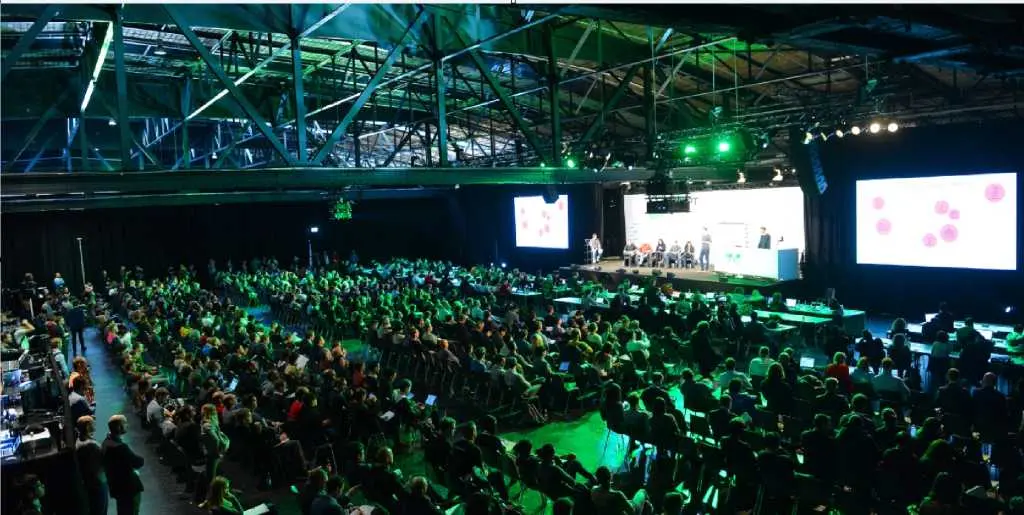
The next phase of artificial intelligence in software development will be under the spotlight at a major technology conference in San Francisco, scheduled for October 13-15, 2026, at the Moscone West Convention Center. With two days remaining before the event begins, organizers are preparing to welcome startup founders, investors, AI experts, software engineers, and technology builders for three days of sessions focused on where AI and software development are heading next.
The conference arrives at a pivotal moment. The first wave of AI-assisted coding gave developers code completion, predicting lines, functions, and boilerplate based on what they had already typed. The second wave brought code suggestions and code generation, allowing AI to write new code or improve existing code from a natural language prompt. Today, coding agents can inspect a codebase, suggest improvements, compile and test the improved code, and iterate toward something better, faster, and safer. They can plan, write, test, review, and debug code. They can chat with developers about all of those steps. They can tackle complex development workflows on their own.
Key Facts at a Glance
- The conference runs October 13-15, 2026, at Moscone West Convention Center in San Francisco.
- More than 200 conference sessions will be held across six stages.
- More than 250 technology leaders will speak.
- Topics include AI agents, generative AI, software engineering, developer tools, enterprise software, and information security.
- Sessions will examine how AI is reshaping SaaS, cloud infrastructure, and industries such as finance, healthcare, and manufacturing.
- A featured session from Anthropic technical staff members Steve Androulakis and Sachin Malhotra will cover how the company behind Claude Code uses fleets of coding agents in its own software engineering work.
- The session will offer practical patterns for delegating agents, reviewing their output, and recovering when they get things wrong.
- The speaker lineup includes leaders from Amazon, Anthropic, Atlassian, Databricks, Flock, Glean, Google, NVIDIA, Okta, OpenAI, Replit, Runware, Together AI, and other companies.
From Autocomplete to Autonomous Agents
The evolution of AI in software development has been rapid and cumulative. Early tools were essentially sophisticated autocomplete engines. They learned from the code already present in an editor and predicted the next token, line, or block. That alone reduced boilerplate fatigue and helped developers stay in flow. But the interaction remained narrow: the human wrote most of the logic, and the machine filled in gaps.
Code suggestions and code generation expanded the relationship. Developers could describe a desired function, component, or test in plain language, and the model would produce a draft. The human still reviewed, edited, and integrated the result. The machine became a collaborative drafter rather than a simple predictor. This shift introduced new questions about correctness, licensing, and maintainability, but it also demonstrated that large language models could reason about code structure and intent.
Coding agents represent a more profound change. Instead of waiting for a prompt and returning a single block of text, an agent can operate within a repository. It can read files, search for relevant symbols, run tests, interpret failures, edit code, and repeat the cycle. It can maintain a plan across multiple steps. It can use tools such as compilers, linters, test runners, and debuggers. In some workflows, it can open a pull request, respond to review comments, and refine its work. The developer moves from writing every line to specifying goals, constraints, and acceptance criteria.
Inside the Agentic Workflow
A coding agent typically begins with a task description. That description might be a bug report, a feature request, a performance objective, or a refactoring goal. The agent explores the codebase to locate relevant files and dependencies. It forms a plan, often breaking the task into smaller steps. It writes or modifies code, then runs tests or static analysis to check its work. If something fails, it reads the error, adjusts its approach, and tries again. It may also summarize its changes for human review.
This loop is powerful because it compresses the edit-test-debug cycle. Developers often spend significant time switching contexts: reading documentation, searching for usages, running commands, and interpreting output. An agent can handle much of that mechanical work. It can also work in parallel. Multiple agents can explore different solutions or cover different parts of a codebase. That parallelism introduces new coordination costs, but it also opens the door to faster iteration on large projects.
Yet agentic coding is not magic. Agents can misunderstand requirements, introduce subtle bugs, duplicate existing logic, or make changes that pass tests but violate architectural principles. They can be overconfident. They can struggle with ambiguous tasks or unfamiliar codebases. The most effective teams treat agents as capable but fallible collaborators. They define clear boundaries, require tests, and review output carefully. They also track costs, because agentic workflows can consume significant compute and token budgets.
Conference Agenda and Themes
The upcoming conference is designed to address these practical realities. Over three days, attendees will choose from more than 200 sessions across six stages. The programming spans beginner-friendly introductions, deep technical dives, and strategic discussions for engineering leaders. The central theme is not simply what AI can do, but how organizations can use it responsibly and effectively.
Sessions will cover how AI agents and generative AI are changing software engineering, developer tools, enterprise software, and information security. Speakers will examine how AI is reshaping SaaS and cloud infrastructure. They will discuss how companies are building and deploying AI systems in production. They will also explore how AI is driving innovation in finance, healthcare, manufacturing, and other industries where reliability, compliance, and data privacy are critical.
For developers, the event offers a chance to compare tools, frameworks, and workflows. For founders and investors, it provides a view of where the startup ecosystem is placing its bets. For engineering leaders, it offers case studies and cautionary tales about adoption, governance, and return on investment. The breadth of topics reflects the fact that AI is no longer a standalone category. It is becoming embedded in the entire software lifecycle.
Anthropic Session on Delegating Agents
One of the most anticipated sessions will come from Anthropic technical staff members Steve Androulakis and Sachin Malhotra. Anthropic is the company behind Claude Code, an AI coding tool that has gained attention for its ability to work with large codebases and multi-step tasks. The session will explain how Anthropic uses fleets of coding agents in its own software engineering work.
According to the session description, attendees will learn practical patterns for delegating agents, reviewing their output, and recovering when they get things wrong. That framing is notable because it treats failure as normal. In real-world software development, agents will sometimes produce incorrect or incomplete work. The question is not whether errors will occur, but how quickly teams can detect, contain, and correct them. The session promises to move beyond demos and into the operational details that matter for production use.
Delegation patterns might include assigning agents to well-scoped tasks, providing them with repository context, limiting their permissions, and requiring them to run tests before submitting changes. Review patterns might involve using one agent to critique another, or using human reviewers to focus on high-risk areas. Recovery patterns might include rollback strategies, automated checks, and clear escalation paths. These patterns are likely to be valuable for teams that are moving from experimentation to systematic adoption.
Speaker Lineup and Industry Representation
The speaker roster includes technology leaders from Amazon, Anthropic, Atlassian, Databricks, Flock, Glean, Google, NVIDIA, Okta, OpenAI, Replit, Runware, Together AI, and many other companies at the cutting edge of AI and software technology. The presence of cloud providers, model developers, developer-tool companies, security firms, and enterprise software vendors reflects the full stack of the AI ecosystem.
This mix matters because the future of AI in software development will not be determined by a single product or platform. It will emerge from the interaction of models, tools, infrastructure, data, security, and human workflows. A coding agent may rely on a foundation model from one company, run on cloud infrastructure from another, integrate with an IDE from a third, and connect to security tooling from a fourth. The conference provides a rare opportunity to see how these pieces are coming together.
Attendees will also have the chance to connect with peers, exchange ideas, and explore the latest innovations. The event is expected to draw a broad audience, from early-stage founders to engineers at large enterprises. Networking is not a side activity; it is part of how the industry shares knowledge and forms partnerships in a field that is changing month by month.
Why This Moment Matters for Enterprise Software
Enterprise software teams face unique pressures. They maintain large, long-lived codebases. They must satisfy regulatory requirements, protect sensitive data, and ensure uptime. They cannot adopt every new tool without considering security, compliance, and integration. At the same time, they are under pressure to deliver features faster and reduce costs.
AI coding agents offer a potential path to both speed and efficiency, but they also raise governance questions. Who is accountable when an agent introduces a vulnerability? How should intellectual property be handled? What logging and audit trails are needed? How can teams prevent agents from accessing secrets or production systems? These questions do not have easy answers, but they are exactly the kind of issues that enterprise leaders will discuss at the conference.
The event will also examine how AI is reshaping SaaS and cloud infrastructure. As AI models become more capable, they are changing how applications are built, deployed, and scaled. Some companies are embedding AI features directly into their products. Others are using AI to optimize cloud costs, automate operations, and improve customer support. The line between traditional software and AI-powered software is blurring.
Security, Governance, and Trust
Information security is another major theme. Coding agents can introduce new attack surfaces. They may generate code that uses insecure libraries, mishandle input, or expose credentials. They may also be vulnerable to prompt injection or data poisoning. Security teams need to understand how agents interact with source code, dependency graphs, build systems, and deployment pipelines.
At the same time, AI can be part of the defense. Agents can scan for vulnerabilities, suggest patches, and help developers respond to incidents. They can analyze logs, correlate alerts, and recommend mitigations. The conference will likely feature sessions on securing AI systems, using AI for security, and managing the risks that come with autonomous code generation.
Trust is the underlying issue. Developers need to trust that an agent's output is correct, secure, and maintainable. Engineering leaders need to trust that adoption will not create unacceptable risk. Customers need to trust that AI-generated software meets the same standards as human-written software. Building that trust requires transparency, testing, and a willingness to treat AI as a component of a larger socio-technical system.
SaaS, Cloud, and Industry Adoption
The conference will explore how AI is driving innovation beyond the technology sector. In finance, AI is used for fraud detection, risk modeling, and customer service. In healthcare, it supports diagnostics, drug discovery, and administrative automation. In manufacturing, it improves quality control, predictive maintenance, and supply chain optimization. Each of these industries has its own constraints, but they share a need for reliable, explainable, and secure AI.
For software developers, the practical implications are broad. They may be asked to integrate AI models into existing applications, build agentic workflows, or create tools that help non-technical users harness AI. They may need to learn new skills in prompt engineering, evaluation, and AI operations. They may also need to rethink career paths as routine coding tasks become more automated.
The conference's focus on developer tools reflects this shift. Toolmakers are racing to add agentic capabilities to IDEs, code review platforms, CI/CD systems, and observability tools. The goal is to make AI assistance seamless, context-aware, and safe. The sessions will likely showcase how these tools are being used in real projects, including their limitations.
Practical Patterns for Agent Delegation
The featured session on delegating agents is likely to resonate because it addresses a gap between hype and practice. Many teams have experimented with AI coding tools, but fewer have established repeatable processes for using them at scale. The session promises to share patterns that Anthropic has learned from its own engineering work.
Attendees can expect to hear about task decomposition, context management, and evaluation. They may learn how to write prompts that include acceptance criteria and constraints. They may see examples of agent fleets working on parallel tasks, with human oversight at critical checkpoints. They may also hear about failure modes and how to design systems that fail safely.
These patterns are not limited to one vendor or model. They reflect a broader maturation of agentic AI. As agents become more capable, the competitive advantage will shift from simply having access to an agent to knowing how to orchestrate many agents effectively. That orchestration includes tool use, memory, permissions, testing, and human review.
The conference will also provide opportunities to compare approaches. Some teams prefer a single powerful agent. Others use specialized agents for planning, coding, testing, and reviewing. Some rely heavily on human review, while others automate more of the pipeline. There is no universal answer, but the exchange of ideas can help teams find what works for their context.
For developers, the most important takeaway may be that agentic coding is a skill. It requires learning how to communicate intent, define boundaries, and evaluate output. It requires understanding when to delegate and when to take over. It requires a healthy skepticism toward confident-sounding suggestions. The conference will offer a concentrated dose of that skill-building.
The event's timing is also significant. It comes as AI coding agents move from research labs into mainstream development teams. The next twelve months will likely see wider adoption, more sophisticated tooling, and new best practices. The sessions, workshops, and conversations at the conference will help shape how that adoption unfolds. For anyone building software today, understanding the trajectory of AI and software development is no longer optional. It is part of the job. The conference offers a front-row seat to that future, with practical guidance from the people building it.
Source:InfoWorld News