




















Why is a handheld fiber laser welding machine replacing traditional welding tools in modern industries?
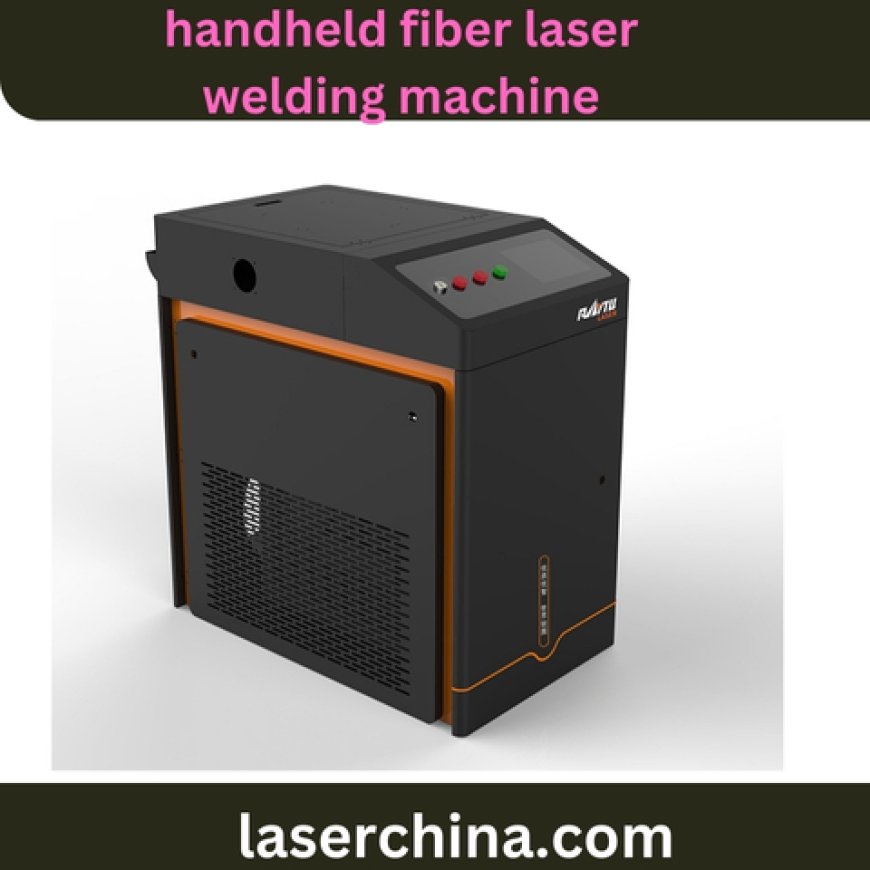
In recent years, the welding industry has witnessed a transformation that quietly challenges the very foundation of traditional joining techniques. The rise of the handheld fiber laser welding machine is one such development that’s turning heads across fabrication shops, automotive plants, construction yards, and even fine metalworking studios.

Why is this tool becoming the preferred option for many operators? Lets explore this shift in detail and understand whats driving its widespread adoption.
The Industrial Shift Towards Precision and Flexibility
Todays manufacturing and fabrication environments demand more than just strengththey need precision, cleanliness, minimal post-processing, and faster output. Traditional MIG, TIG, and stick welding methods, although effective in certain use cases, often fall short when it comes to fine detailing or rapid workflow transitions.
A handheld fiber laser welding machine is designed to meet these newer expectations. It is not just a welding unit; it's a portable solution that aligns with modern productivity goals. Operators can move freely, switch welding angles instantly, and achieve consistent quality without setting up complicated rigs or spending time on cleaning spatter afterward.
The machine's portability introduces a flexibility rarely seen in fixed welding setups. Whether you're working on-site in a tight corner or finishing parts in a high-volume workshop, this tool adapts to your environment.
Real-Time Control Without Technical Complexity
One of the major bottlenecks in traditional welding is the skill curve. Achieving consistent welds with stick, MIG, or TIG welding requires substantial hands-on training. The joint gaps must be precise, the heat input has to be monitored manually, and electrode handling is delicate work.
On the other hand, the handheld fiber laser welding machine provides real-time control without excessive operator training. Once set up, the laser precisely concentrates heat in a localized area, reducing thermal deformation. Even beginners can get to work quickly with only a basic introduction to the machines parameters. The intuitive controls allow operators to adjust power levels, pulse frequencies, and beam width with ease, making it easy to tailor the weld for different thicknesses and materials.
Seamless Welding Across Diverse Materials
Material compatibility has long been a constraint in traditional welding. Aluminum, stainless steel, carbon steel, brass, titaniumeach metal behaves differently under heat. Switching from one to another often means changing tools, wires, or even welding methods altogether.
The handheld fiber laser welding machine operates effectively across a wide variety of metals without major setup changes. This adaptability is critical for workshops and factories handling custom projects or mixed-material production runs. Thin sheets, thick panels, reflective materialslaser technology handles them all without compromising weld quality.
Its especially effective for reflective surfaces like aluminum, which are traditionally difficult to weld due to inconsistent heat absorption. Fiber lasers are more resistant to back-reflection, reducing the risk of machine damage and maintaining process stability.
Compact Design Meets High-Power Output
Power has often been associated with bulk. Larger, heavier welding machines are still commonly used because of their wattage capacity. However, the handheld fiber laser welding machine breaks this mold. Despite being compact and portable, it can deliver laser power up to 2000W or more, enough to penetrate thick metal sheets while ensuring clean and strong fusion.
This means heavy-duty jobs no longer require oversized equipment. Technicians can carry one portable unit that does the work of several traditional machines, freeing up floor space and simplifying logisticsespecially beneficial for mobile repair services or remote construction sites.
Enhanced Joint Aesthetics with Minimal Post-Weld Processing
A hidden but significant cost in traditional welding is post-weld processing. Grinding, brushing, or polishing is often needed to improve weld appearance or remove oxidation.
With a handheld fiber laser welding machine, the story is different. The lasers precision produces clean, narrow weld seams that often require no additional processing. Theres little to no splatter, no discoloration on surrounding surfaces, and virtually no need for rework. This directly improves production timelines and reduces labor costs associated with finishing work.
For industries like kitchenware manufacturing, electronics casings, or custom metal furniturewhere appearance is as important as strengththis becomes a major asset.
Safety Measures That Align with Operator Efficiency
Safety in welding isnt just about protecting from sparks. Exposure to UV rays, fumes, and arc radiation is a common concern. Fiber laser systems produce minimal fume emissions and operate silently compared to high-heat arc welders.
The handheld fiber laser welding machine is typically paired with safety goggles and interlock protections, ensuring that accidental beam exposure is avoided. Since there's no direct open flame, the risks associated with traditional gas cylinders or flammable surroundings are significantly reduced. The machine is also energy-efficient, consuming less electricity and reducing thermal hazards.
Faster Production Cycles Without Compromising Quality
Time is moneyespecially in industrial fabrication. A consistent theme among users of the handheld fiber laser welding machine is the dramatic reduction in cycle time. This comes not just from faster welding speeds but also from eliminating delays caused by setup, repositioning, rework, and cleaning.
For example, welding aluminum with TIG might require multiple passes, careful filler application, and constant heat monitoring. With laser welding, most joints can be sealed in a single pass, with consistent bead formation and strong joint integrity.
Manufacturers with high-mix, low-volume production benefit immensely from this efficiency. The ability to switch quickly between different components, materials, or geometries without extensive reconfiguration keeps projects moving and deadlines on track.
Portability That Redefines Workshop Layouts
In many fabrication environments, workspace limitations dictate how projects are managed. Heavy machinery is often fixed, and operators must bring the material to the station. This approach limits layout flexibility.
A handheld fiber laser welding machine reverses this dynamic. Being portable, it allows the operator to bring the tool to the workpiece. This opens up new layout possibilities, reduces unnecessary handling of heavy components, and allows for better use of limited floor space.
Imagine being able to walk around a large metal structure and perform precise welds at any angle without repositioning it multiple times. Thats exactly what this machine offersefficiency through mobility.
Support for Automation and Smart Monitoring
As more industries move toward automation and data-driven operations, tools must evolve accordingly. Some advanced handheld fiber laser welding machines now include digital interfaces, real-time diagnostics, and even connectivity to industrial monitoring systems.
This makes them compatible with broader smart manufacturing goals. Parameters like welding speed, depth, temperature, and beam focus can be logged and analyzed for optimization. Maintenance schedules can be automated, and performance issues can be detected early. This shift from manual operation to intelligent welding solutions supports consistent quality and reduces downtime.
Versatile Applications in Diverse Industries
The appeal of a handheld fiber laser welding machine lies in its versatility. It serves diverse industries with equal efficiency:
-
Automotive: Welding car panels, frames, fuel tanks, and exhaust components.
-
Aerospace: Sealing lightweight aluminum and titanium components.
-
Construction: On-site welding of structural elements.
-
Shipbuilding: Rapid assembly of corrosion-resistant steel panels.
-
Medical Equipment: Precision welding of stainless steel and titanium tools.
-
Electronics: Spot welding of enclosures, batteries, and contacts.
-
Art & Design: Custom fabrication for metal art, signage, and dcor.
Each of these sectors benefits from the portability, control, and clean output that only this type of laser machine can provide.
Final Thoughts
The transition from conventional welding to laser-based methods isn't just about innovation for its own sakeit reflects a deeper need for efficiency, flexibility, and quality in modern metalworking. The handheld fiber laser welding machine has positioned itself at the center of this shift, offering practical solutions to challenges that have long limited productivity and output consistency.
As industries continue to evolve, this machine stands out as not only a reliable tool but a strategic investment. Whether you're in a high-volume production line or a small custom fabrication shop, adopting this technology is less about replacing tradition and more about adapting to the future of weldingone clean, precise, and powerful joint at a time.