

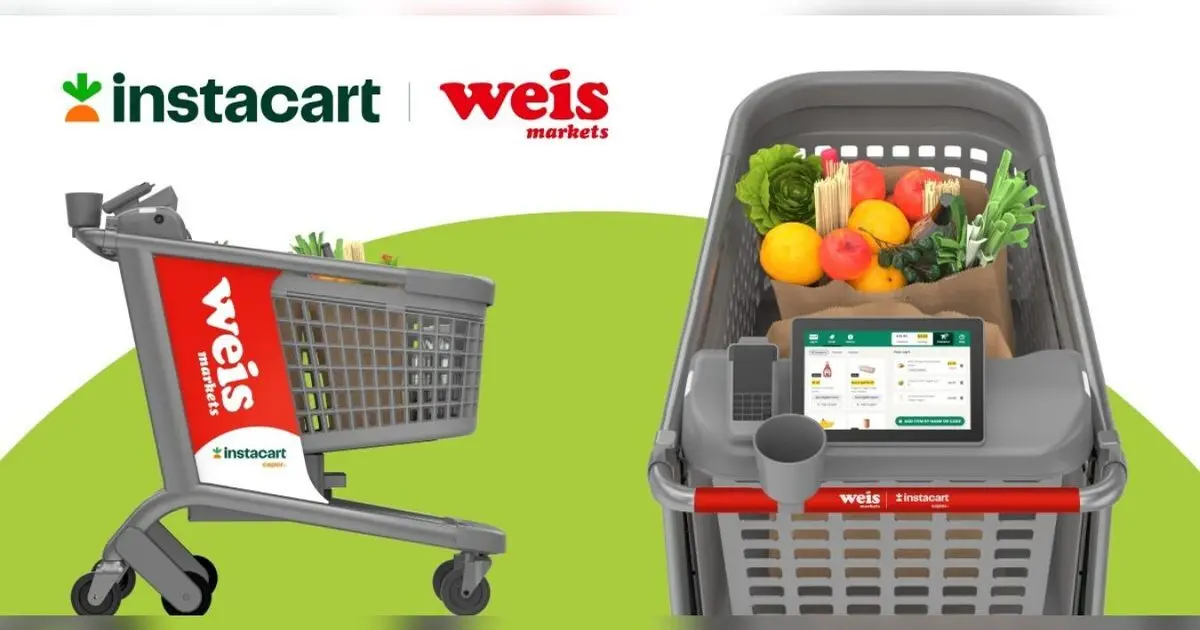
Instacart's AI-powered shopping carts are making their debut in select Weis Markets locations across Pennsylvania, with plans for wider deployment later this year. The company's Caper Carts promise a streamlined checkout experience, allowing shoppers to see a running total, clip digital coupons, apply loyalty rewards, weigh items, and pay directly from the cart. However, the technology behind this convenience is a dense sensor array that turns the grocery basket into a mobile data collection platform, sparking debate about the trade-off between ease and privacy.
The hardware that enables these features is extensive. Each cart is equipped with basket-facing cameras to recognize items as they are placed inside, outward-facing cameras to monitor the store environment and customer movements, a location-tracking system to follow the cart's path through aisles, built-in scales for weighing produce, touchscreens for interaction, and payment terminals for checkout. This combination transforms an ordinary shopping cart into a rolling sensor platform, capable of capturing a rich trail of data: what products are selected, how long the shopper lingers in front of a shelf, which loyalty accounts are used, and how they respond to on-screen prompts.
Instacart frames the Caper Cart as a tool to personalize the shopping experience, reduce out-of-stocks, lift sales, and generate new retail media revenue. For shoppers, the benefits are tangible: price visibility during the trip, no waiting at the checkout counter, and easier access to discounts. But those conveniences come at the cost of leaving behind a detailed digital footprint that goes far beyond a traditional purchase receipt. The cart records product choices, the sequence of selections, movement patterns, loyalty activity, and real-time responses to in-aisle advertisements.
How the Cart Follows Shoppers
The core technology behind the Caper Cart is computer vision and sensor fusion. As a shopper places an item in the basket, the built-in cameras analyze the product's shape, color, and packaging to identify it. The integrated scale handles produce and other items sold by weight, ensuring accurate pricing without a cashier. Meanwhile, the location-tracking system, which often uses a combination of Bluetooth beacons and store mapping, knows exactly where the cart is at any moment. This allows the system to connect the session to a loyalty account and surface relevant offers on the display while the trip is still in progress.
From a retailer's perspective, this setup provides an unprecedented view of pre-checkout behavior. It can register exactly what enters the basket, follow the cart's movement around the store, and link that data to a customer's purchase history. This level of detail enables analytics that were previously impossible, such as understanding which aisle displays lead to higher conversion rates or how promotional placements influence impulse buys. For the shopper, however, it means that every moment of the shopping trip is observed and analyzed, raising questions about data ownership, consent, and long-term profiling.
Where the Ad Pressure Begins
Weis Markets plans to incorporate on-cart advertising into the experience, and Instacart's promotional materials highlight aisle-aware promotions, real-time coupons, and retail media placements tied to store location. The screen becomes a point-of-sale advertisement at the exact moment shoppers are making decisions between brands, sizes, and impulse purchases. This targeted approach is designed to capitalize on the shopper's presence in front of a specific product, turning the cart into both a helper and a seller.
Instacart reports that location-aware prompts have produced nearly a one percentage point average lift in basket size. This figure succinctly explains the business model behind the Caper Cart: it is not merely a checkout tool but an ad panel that follows customers in motion. The technology allows retailers to serve ads that are contextually relevant to the shopper's location, potentially increasing the likelihood of a purchase. For example, a shopper lingering in the cereal aisle might see a discount on a competing brand, or someone near the dairy section might be offered a coupon for cheese. While this can be seen as helpful assistance, it also amplifies the pressure on consumers to make quick decisions under commercial influence.
The rise of retail media networks, where brands pay for ad placements within stores, is a multi-billion-dollar trend. Instacart's Caper Carts are a physical extension of this digital advertising model, blending the convenience of e-commerce with the immediacy of in-store shopping. Critics argue that the cart's constant ad exposure blurs the line between helpful suggestion and intrusive marketing, especially when combined with the knowledge that the system is tracking every response.
What Shoppers Should Check Next
Caper Carts are already operational in more than 100 cities across 15 states, in over a dozen retail banners. Instacart states that deployments have tripled year over year, indicating rapid adoption of the technology. Weis Markets is not an isolated test but part of a broader rollout that includes chains like Kroger, Albertsons, and other regional grocers. The pace suggests that AI-assisted shopping carts may become a standard feature in many supermarkets within the next few years.
The carts can indeed be genuinely helpful for shoppers who value price visibility and want to avoid long checkout lines. Features like automatic scanning and real-time budget tracking reduce friction and save time. However, the presence of cameras, location systems, ad targeting, and loyalty linking demands the same level of skepticism that consumers have learned to apply to connected TVs, smartphone apps, and smart speakers. Each captured data point can be aggregated to build detailed profiles that may be used for personalized pricing, targeted advertising, or even shared with third parties.
Before logging into the Caper Cart with a loyalty account, shoppers should take the time to review the store's terms regarding data collection, retention, and sharing. Key questions to consider include: How long is the data stored? Is it anonymized or linked to personal identifiers? Can shoppers opt out of specific data uses, such as location tracking or ad personalization? Are the ads based solely on aisle location, or do they tap into past purchase history? The cart may be optional, and some stores still offer traditional checkout lanes, but the trade-off between convenience and privacy is worth understanding before pushing the cart down the aisle.
Expanding beyond the immediate story, the introduction of AI shopping carts fits into a larger narrative about the digitization of physical retail. Supermarkets are investing in a suite of technologies—from smart shelves and digital price tags to computer vision checkout—to compete with the data-rich environments of e-commerce platforms. The physical store becomes a source of behavioral data that can be mined for insights and revenue, changing the fundamental relationship between retailer and shopper. Instacart's Caper Cart is a prominent example of this trend, but similar systems are being developed by other startups and large tech companies.
Historical context shows that each wave of retail technology has brought both benefits and concerns. Self-checkout machines reduced labor costs but also increased theft and customer frustration. Loyalty cards offered discounts but enabled detailed purchase tracking. AI-powered carts are the latest step in this evolution, offering a more integrated experience while demanding greater surrender of personal information. The long-term impact on shopping habits and privacy expectations remains to be seen, but early adopters are already voicing opinions in online forums and consumer reviews.
For now, shoppers in Weis Markets will be among the first to experience the full potential of Caper Cart technology. They will enjoy the ease of scanning items as they shop, the convenience of paying from the cart, and the occasional surprise of a personalized coupon. Yet they will also navigate a store where every movement is observed and every decision is recorded. The balance between innovation and intrusion is a delicate one, and it is up to each individual to decide whether the benefits outweigh the costs. As more retailers follow Weis's lead, the conversation around privacy in public spaces will continue to evolve, making it essential for consumers to stay informed and vigilant.
Source:Digital Trends News