

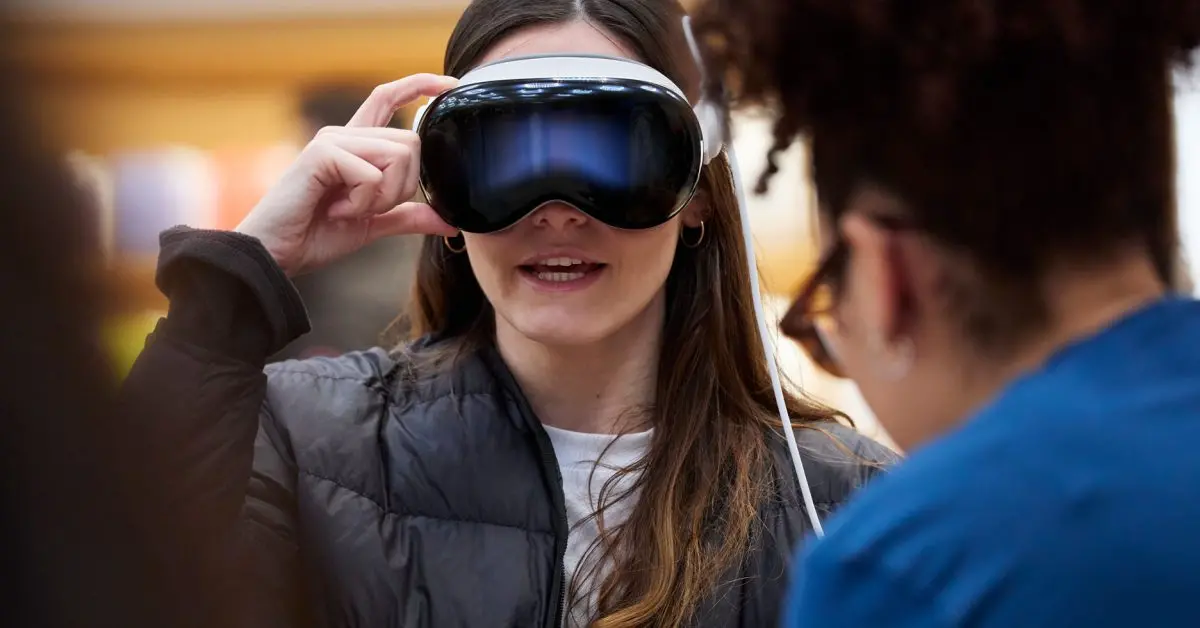
OpenAI has made a significant hire by poaching Paul Meade, the executive who oversaw Apple's Vision Pro headset and its smart glasses initiative. According to reports, Meade will join OpenAI's hardware unit, which is developing AI-first devices. This move is the latest in a series of high-profile hires from Apple as OpenAI expands its hardware ambitions.
Paul Meade's Career at Apple
Paul Meade was a vice president at Apple and a key figure in the company's hardware engineering team. He began his tenure at Apple in 2010, working as a manager on the iPad team during a period of explosive growth for the product line. By 2012, he had moved to become the head of iPhone program management, overseeing the logistics and development of Apple's most important product. In 2017, he joined the Vision Products Group (VPG), a secretive division focused on augmented reality and virtual reality headsets. By 2019, Meade had taken over all hardware engineering for the VPG, effectively becoming the top engineering leader for Apple's spatial computing efforts.
Under Meade's leadership, the VPG designed and shipped the Apple Vision Pro, which launched in early 2024. The headset, priced at $3,499, represented Apple's first major new product category since the Apple Watch. While the Vision Pro received critical acclaim for its cutting-edge technology and immersive experiences, its high price and limited app ecosystem initially constrained sales. Analysts estimated that Apple sold fewer than 500,000 units in the first year. Meade also led the development of Apple's smart glasses, a more consumer-friendly wearable that is expected to launch in late 2027. The smart glasses project aims to bring augmented reality to a broader audience, building on technologies developed for the Vision Pro.
Meade's departure comes at a time of significant organizational change at Apple. In recent months, John Ternus, previously the senior vice president of Hardware Engineering, was appointed as Apple's next CEO, succeeding Tim Cook. As part of the transition, Johny Srouji, Apple's longtime chip chief, became chief hardware officer, replacing Ternus. Srouji initiated a controversial shake-up of the hardware engineering unit, reassigning several vice presidents and altering reporting structures. Meade and other hardware leaders were moved to report to Tom Marieb, the new vice president of hardware engineering, rather than directly to Srouji. This effective demotion—moving them down a level in the organization—reportedly contributed to Meade's decision to leave the company.
OpenAI's Hardware Ambitions and the io Subsidiary
OpenAI has been aggressively building its hardware capabilities, particularly through a subsidiary called io. This unit was formed last year in collaboration with legendary designer Jony Ive and several members of his design firm LoveFrom. The goal of io is to create a family of AI-first hardware devices that leverage OpenAI's advanced models, such as GPT-4 and future iterations. The company envisions these devices as more intuitive and natural interfaces for AI, moving beyond traditional screens and keyboards.
The hiring of Paul Meade is a major coup for OpenAI. Meade brings deep expertise in designing and engineering high-complexity hardware, from the iPhone to the Vision Pro. His experience with spatial computing and smart glasses is particularly valuable, as OpenAI is believed to be exploring wearable AI devices that can overlay information onto the real world. Meade joins a growing team of former Apple talent at OpenAI. Earlier, Jony Ive brought on Evans Hankey, who succeeded Ive as Apple's head of design and led the team for three years. Another recruit is Tang Ten, a senior designer who worked on the iPhone and Apple Watch. These hires underscore OpenAI's commitment to building polished, user-friendly hardware that can compete with the likes of Apple and Samsung.
The io subsidiary operates with a startup-like culture, separate from OpenAI's core research and software divisions. It is reportedly staffed by a mix of hardware engineers, industrial designers, and AI researchers. The team is working on several projects, including a possible AI-powered smart assistant device similar to a smart speaker but with advanced conversational capabilities, and a wearable that could replace smartphones for certain tasks. Meade's leadership in hardware engineering will be crucial to turning these concepts into shippable products.
Broader Implications for the Tech Industry
The poaching of Paul Meade highlights the intense competition for top hardware talent, especially as AI companies seek to integrate their models into physical products. Apple has long been a talent magnet due to its reputation for design excellence and engineering rigor. However, the restructuring under Ternus and Srouji may have created an opportunity for rivals to lure away disaffected executives. While Meade's departure is a loss for Apple, the company has a deep bench of engineering leaders. Fletcher Rothkopf, Meade's longtime deputy, will take over many of his responsibilities, ensuring continuity in the Vision Products Group.
For OpenAI, this hire signals that it is serious about becoming a hardware company, not just a software one. The success of the io subsidiary will depend on its ability to ship products that are as compelling as the software that powers them. With Meade on board, OpenAI gains a proven leader who knows how to bring complex devices from concept to mass production. The next few years will reveal whether OpenAI can challenge Apple on its home turf—creating hardware that people love to use.
Meanwhile, Apple's smart glasses project continues under new leadership. The company is expected to release its first-generation smart glasses in 2027, potentially featuring a compact design with onboard AI processing. The glasses will likely integrate with the Apple ecosystem, including iPhones and Apple Watch, and offer features like navigation, notifications, and real-time translation. The competition between Apple's established hardware prowess and OpenAI's AI-first approach will be a fascinating story to follow.
In the broader context, the tech industry is witnessing a convergence of AI and hardware. Companies like Meta, Google, and Amazon are also investing heavily in smart glasses and AI assistants. Meta's Ray-Ban Stories and its more advanced Orion AR glasses are direct competitors to Apple's smart glasses. OpenAI, with its strong AI models and now a top hardware executive, is positioning itself to be a key player in this emerging market. The outcome of these efforts will shape how people interact with technology in the coming decade.
Source:9to5Mac News