

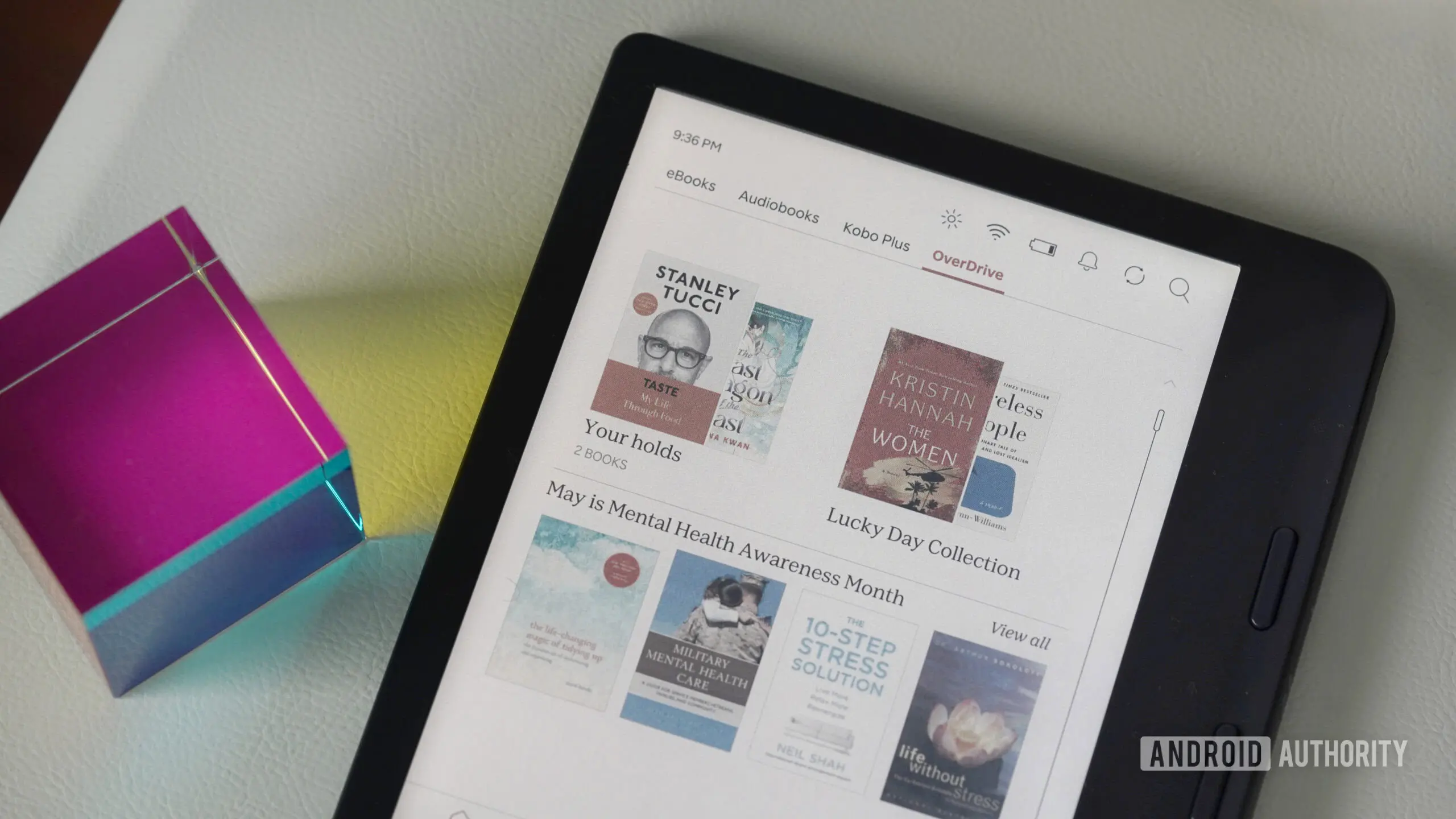
Kobo users now have one less bit of reading admin to deal with. After announcing StoryGraph support last month, Rakuten Kobo has switched the integration on, meaning your Kobo reading progress can now sync with StoryGraph automatically.
As detailed in a press release in May, Kobo eReaders and apps can sync with a user’s StoryGraph account. Recently opened books can show up on your StoryGraph “Currently Reading” shelf, progress percentages can sync between Kobo and StoryGraph, and finishing a book on Kobo can automatically mark it as “Read” on StoryGraph.
The integration works with both eBooks and audiobooks, so it should work whether you are reading on a Kobo device or listening your way through the backlog. Once everything is linked, StoryGraph can use that activity for its reading stats, recommendations, challenges, streaks, and book-club features.
The Kobo help pages explain how easy it is to get started. Sign in to your Kobo account on Kobo.com, go to Account Settings, choose Integrations, then select StoryGraph and Connect. You can also head straight to kobo.com/account/integrations and connect StoryGraph from there. After signing in to StoryGraph and approving the link, your progress should start syncing automatically.
While it does not directly impact your reading, it should make the wider experience feel a bit more joined up. Kindle has long had Goodreads integration as one of its quieter advantages, even if Goodreads itself is not exactly beloved by everyone. StoryGraph has built a strong following as a more stats-heavy alternative, and automatic Kobo syncing means readers can get those insights without having to remember to update another app every time they make progress.
Background: The Evolving E-Reader Landscape
E-readers have revolutionized how people consume books. Amazon’s Kindle line dominates the market, but Rakuten Kobo has carved out a loyal niche by emphasizing openness, customization, and a friendly reading ecosystem. Kobo devices support EPUB format natively, offer OverDrive library borrowing integration, and now provide seamless syncing with third-party reading trackers like StoryGraph.
StoryGraph, founded by Nadia Odunayo, emerged as a community-driven alternative to Goodreads. It focuses on detailed reading statistics, mood tagging, content warnings, and personalized recommendations. Its growth has been steady, especially among readers who find Goodreads’ interface cluttered or its recommendation algorithm lacking. The integration with Kobo is a strategic move that strengthens both platforms: Kobo gains a data-rich companion app, and StoryGraph gains direct access to reading activity from a major e-reader brand.
How the Integration Works in Practice
Once a user enables the integration, every time they open a book on their Kobo device or app, it appears on their StoryGraph "Currently Reading" shelf. The percentage read updates automatically without any manual input. When a book is finished, StoryGraph moves it to the "Read" shelf and adds it to the user’s reading stats. This data then feeds into StoryGraph’s features: users can track their reading pace over time, create reading challenges (like reading a certain number of pages per day or finishing a genre), and participate in book clubs that rely on shared reading progress.
For audiobook listeners, the integration works similarly. Kobo’s audiobook app (available on iOS and Android) syncs listening progress to StoryGraph. This is particularly valuable for users who switch between reading and listening to the same title—progress stays consistent across formats. Kobo also offers audiobook purchases through its store, though the catalog is smaller than Audible’s.
Comparison with Kindle and Goodreads Integration
Amazon’s Kindle devices have long offered seamless Goodreads integration. When you finish a book on Kindle, it updates your Goodreads reading challenge and can post updates to your feed. However, Goodreads lacks the granular stats that StoryGraph provides. Goodreads shows basic shelf counts and yearly challenge progress, but StoryGraph breaks down reading habits by mood, pace, genre, and length. It also offers content warnings and a “TBR (To Be Read) pile” that is easy to reorder and filter.
The Kobo-StoryGraph integration is comparable to Kindle-Goodreads in ease of use, but it adds layers of data analysis that serious bookworms crave. Additionally, StoryGraph is ad-free and independent, which appeals to users who dislike Amazon's ecosystem lock-in. For Kobo users, this move could be a deciding factor when choosing between e-reader platforms.
Setting Up the Integration
The setup process is straightforward, as outlined on Kobo’s help pages. Users must first have a Kobo account and a StoryGraph account. Then, they log in to Kobo.com, navigate to Account Settings, select Integrations, choose StoryGraph, and click Connect. Kobo redirects to StoryGraph, where the user must approve permissions (typically read/write access to bookshelves and progress). After approval, the two accounts are linked. The sync happens in the background; users do not need to keep both apps open.
One notable aspect is that the integration is opt-in. Some readers may prefer to keep their reading private or use other tracking methods. Kobo respects privacy by requiring explicit consent. Once linked, users can disconnect at any time via the same settings page.
Impact on the Reading Experience
Automatic syncing removes friction from the reading journaling process. Many readers track their progress in multiple places—manually updating Goodreads, keeping a bullet journal, or using a spreadsheet. With Kobo's StoryGraph sync, one source of manual work disappears. This encourages more consistent tracking, which in turn leads to more accurate recommendations and a richer sense of personal reading history.
Moreover, the integration benefits community features. StoryGraph groups (book clubs) can see members’ progress in real time if members have linked their accounts. This makes it easier to discuss books without spoilers or uneven pacing. For example, a club reading a novel over two weeks can ensure everyone is on schedule by checking the shared progress.
Historical Context: The Rise of Social Reading
The concept of social reading is not new. Goodreads launched in 2007 and was acquired by Amazon in 2013. For over a decade, it has been the default platform for book lovers. But dissatisfaction grew: lack of modernization, poor mobile app performance, and controversies over review manipulation led users to seek alternatives. StoryGraph, launched in 2020, gained traction through word of mouth and its focus on data visualization. By 2023, it had over a million registered users, and its integration with Kobo signals a broader trend toward interoperability in the digital reading space.
Kobo itself has a history of embracing open standards. It was one of the first e-reader makers to support EPUB and DRM-free books. It partnered with libraries through OverDrive, allowing users to borrow eBooks directly from their device. Now, with StoryGraph integration, Kobo is positioning itself as the choice for readers who care about tracking and community, not just consumption.
Technical Considerations and Future Possibilities
The sync relies on OAuth 2.0 authentication, ensuring that passwords are not shared between platforms. Kobo’s API exposes reading metadata (title, author, progress percentage, state) which StoryGraph then processes. No financial transaction data is exchanged. The sync is one-way from Kobo to StoryGraph; actions taken on StoryGraph (like adding a book to TBR) do not automatically appear on Kobo. This is a limitation compared to Kindle-Goodreads, where shelving on Goodreads can create a book list on Kindle. However, Kobo users can still manually add books to their library from StoryGraph if they wish.
Future updates could include two-way sync, or integration with other services like LibraryThing or The StoryGraph’s own recommendation engine. For now, the current integration addresses a key pain point: manual tracking.
Reception from the Community
Early reactions on social media and forums have been positive. Reddit’s r/kobo and r/storygraph communities have threads encouraging users to test the integration. Many praise the ease of setup and the instant syncing. A few users reported minor issues, such as books from third-party sources (side-loaded via Calibre) not syncing, which is expected since the integration likely only works with books purchased or borrowed through Kobo’s store. However, for most users, the feature works as advertised.
Some critics point out that this integration could have been available years ago, given that Kobo has had a public API for a while. Nevertheless, the official partnership ensures reliability and support. It also aligns with Kobo’s broader strategy to compete with Kindle by offering unique software features.
Broader Industry Implications
This integration could pressure Amazon to improve Goodreads or offer more flexible integrations with third-party services. We might see a wave of similar partnerships, such as Kindle linking with alternative reading apps. However, Amazon historically has kept its ecosystem closed. The Kobo-StoryGraph move demonstrates that openness can be a competitive advantage, especially among power users who value data control.
For StoryGraph, this partnership is a major milestone. It validates the platform’s approach and could accelerate user growth. StoryGraph has remained ad-free, relying on optional subscriptions for premium features. The influx of Kobo users may boost both free and premium sign-ups. Additionally, StoryGraph could leverage the integration to refine its recommendation algorithms, using real-time reading data rather than just shelving behavior.
In conclusion, Kobo’s StoryGraph integration is a welcome addition for readers who crave automatic tracking and detailed analytics. The setup is simple, the sync is reliable, and the benefits extend to book clubs, challenges, and personal history. While it may not directly impact the act of reading, it enhances the overall ecosystem. As e-reading evolves, such integrations will become standard, and Kobo has taken a bold step ahead of the curve.
Source:Android Authority News